


- Afhalen na 1 uur in een winkel met voorraad
- Gratis thuislevering in België vanaf € 30
- Ruim aanbod met 7 miljoen producten
- Afhalen na 1 uur in een winkel met voorraad
- Gratis thuislevering in België vanaf € 30
- Ruim aanbod met 7 miljoen producten





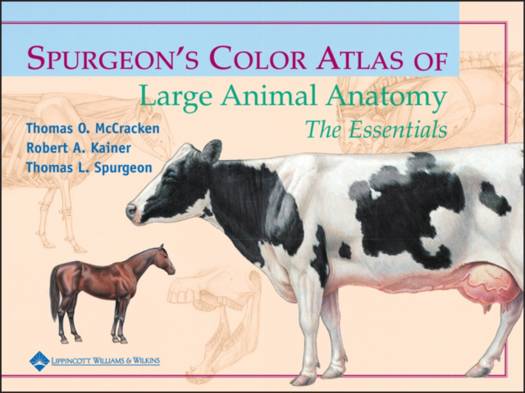
Spurgeon's Color Atlas of Large Animal Anatomy
The Essentials
Thomas O McCracken, Robert A Kainer, Thomas L Spurgeon
Paperback | Engels
€ 152,95
+ 305 punten
Omschrijving
Extraordinary accuracy and beautiful original artwork are just two features readers will find in this new resource, providing a basic foundation in domestic large animal anatomy. Its unique organization includes the anatomy of all organ systems in the various species, described in a consistent manner.
The book presents relevant anatomy of the following species:
* Horse (with contributors by Dr. Gayle Trotter)
* Ox (with contributions by Dr. Fran Garry)
* Sheep and goat (with contributions by Dr. Joan Bowen)
* Llama and alpaca (with contributions by Dr. LaRue Johnson)
* Swine (with contributions by Dr. LaRue Johnson)
* and chicken (with contributions by Dr. John Avens).
Features that enhance understanding:
* Carefully selected labeling helps students learn and remember structures and relationships.
* Male and female of a given species are depicted on facing pages so that topographic anatomy is easy to compare.
* Structures common to various animals are labeled several times, whereas unique structrur5es are labeled only on one or two species so students can make rapid distinctions of the structures peculiar to certain animals.
* An introduction provides readers with a background in nomenclature and anatomic orientation so they can benefit from the atlas even if they lack training in anatomy.
The Atlas depicts topographic relationships of major organs in a simple, yet technically accurate presentation that's free of extraneous detail so that those using the atlas can concentrate on the essential aspects of anatomy.
The book presents relevant anatomy of the following species:
* Horse (with contributors by Dr. Gayle Trotter)
* Ox (with contributions by Dr. Fran Garry)
* Sheep and goat (with contributions by Dr. Joan Bowen)
* Llama and alpaca (with contributions by Dr. LaRue Johnson)
* Swine (with contributions by Dr. LaRue Johnson)
* and chicken (with contributions by Dr. John Avens).
Features that enhance understanding:
* Carefully selected labeling helps students learn and remember structures and relationships.
* Male and female of a given species are depicted on facing pages so that topographic anatomy is easy to compare.
* Structures common to various animals are labeled several times, whereas unique structrur5es are labeled only on one or two species so students can make rapid distinctions of the structures peculiar to certain animals.
* An introduction provides readers with a background in nomenclature and anatomic orientation so they can benefit from the atlas even if they lack training in anatomy.
The Atlas depicts topographic relationships of major organs in a simple, yet technically accurate presentation that's free of extraneous detail so that those using the atlas can concentrate on the essential aspects of anatomy.
Specificaties
Betrokkenen
- Auteur(s):
- Uitgeverij:
Inhoud
- Aantal bladzijden:
- 192
- Taal:
- Engels
Eigenschappen
- Productcode (EAN):
- 9780683306736
- Verschijningsdatum:
- 1/02/2008
- Uitvoering:
- Paperback
- Formaat:
- Trade paperback (VS)
- Afmetingen:
- 304 mm x 231 mm
- Gewicht:
- 625 g


Alleen bij Standaard Boekhandel
+ 305 punten op je klantenkaart van Standaard Boekhandel
Cadeau

AANGERADEN


Beoordelingen
We publiceren alleen reviews die voldoen aan de voorwaarden voor reviews. Bekijk onze voorwaarden voor reviews.