


- Afhalen na 1 uur in een winkel met voorraad
- Gratis thuislevering in België vanaf € 30
- Ruim aanbod met 7 miljoen producten
- Afhalen na 1 uur in een winkel met voorraad
- Gratis thuislevering in België vanaf € 30
- Ruim aanbod met 7 miljoen producten





€ 0,49
Eenvoudig bestellen
Veilig betalen


Onmiddellijk geleverd via e-mail
Omschrijving
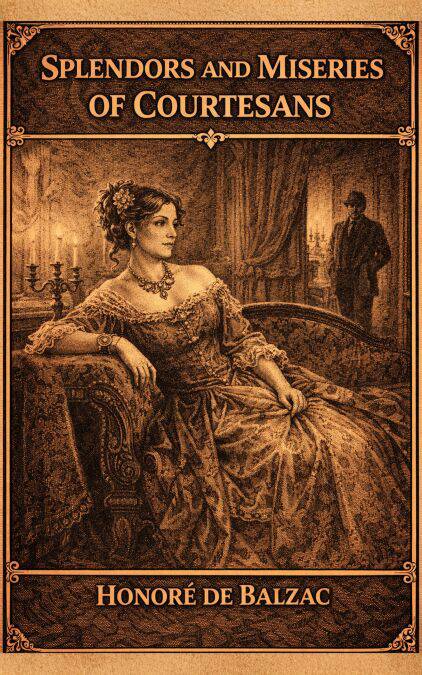
Splendors and Miseries of Courtesans is one of Honoré de Balzac's most gripping and ambitious novels, a powerful installment in his monumental literary cycle, La Comédie Humaine. Set in the dazzling yet treacherous world of 19th-century Paris, this sweeping narrative exposes the glittering façade of high society and the moral decay festering beneath its surface.
At the center of the story is Lucien de Rubempré, a charming and ambitious young man determined to reclaim his place among the elite after earlier disappointments. Desperate for wealth and influence, Lucien becomes entangled in a web of manipulation orchestrated by the enigmatic and formidable Vautrin—a master strategist whose intelligence and ruthlessness make him one of Balzac's most unforgettable characters. Under Vautrin's calculated guidance, Lucien seeks to exploit the rigid social structures of Paris to achieve status and power.
Interwoven with Lucien's fate is the tragic figure of Esther Gobseck, a woman caught between devotion and exploitation. Her beauty and vulnerability make her both a pawn and a symbol of the contradictions within a society obsessed with wealth and appearances. Through Esther's sacrifice and Lucien's ambition, Balzac crafts a profound meditation on desire, loyalty, and the human cost of social ascent.
The novel moves fluidly between opulent salons, shadowy backrooms, financial institutions, and courtrooms, offering a panoramic vision of Parisian life. Balzac masterfully reveals how money, politics, and reputation shape destinies, reducing individuals to pieces in a larger game of power. The "splendors" of luxury and aristocratic privilege stand in stark contrast to the "miseries" of emotional suffering, moral compromise, and inevitable downfall.
Rich in psychological insight and dramatic tension, Splendors and Miseries of Courtesans examines the illusions of success and the fragile boundaries between respectability and disgrace. Balzac's intricate plotting and vivid characterizations illuminate the complexities of human motivation—ambition fueled by insecurity, love shadowed by calculation, and loyalty tested by greed.
Beyond its compelling narrative, the novel serves as a penetrating social critique. Balzac portrays a society in which financial speculation rivals noble lineage, and where the pursuit of prestige often demands the sacrifice of integrity. The legal system, the press, and the aristocracy all become arenas in which truth is manipulated and justice bends to influence.
A masterpiece of realism and dramatic storytelling, Splendors and Miseries of Courtesans remains a timeless exploration of power, ambition, and the price of illusion. Through unforgettable characters and a richly textured portrayal of Paris, Balzac delivers a sweeping epic that captures both the brilliance and the brutality of a world driven by desire and ambition.
At the center of the story is Lucien de Rubempré, a charming and ambitious young man determined to reclaim his place among the elite after earlier disappointments. Desperate for wealth and influence, Lucien becomes entangled in a web of manipulation orchestrated by the enigmatic and formidable Vautrin—a master strategist whose intelligence and ruthlessness make him one of Balzac's most unforgettable characters. Under Vautrin's calculated guidance, Lucien seeks to exploit the rigid social structures of Paris to achieve status and power.
Interwoven with Lucien's fate is the tragic figure of Esther Gobseck, a woman caught between devotion and exploitation. Her beauty and vulnerability make her both a pawn and a symbol of the contradictions within a society obsessed with wealth and appearances. Through Esther's sacrifice and Lucien's ambition, Balzac crafts a profound meditation on desire, loyalty, and the human cost of social ascent.
The novel moves fluidly between opulent salons, shadowy backrooms, financial institutions, and courtrooms, offering a panoramic vision of Parisian life. Balzac masterfully reveals how money, politics, and reputation shape destinies, reducing individuals to pieces in a larger game of power. The "splendors" of luxury and aristocratic privilege stand in stark contrast to the "miseries" of emotional suffering, moral compromise, and inevitable downfall.
Rich in psychological insight and dramatic tension, Splendors and Miseries of Courtesans examines the illusions of success and the fragile boundaries between respectability and disgrace. Balzac's intricate plotting and vivid characterizations illuminate the complexities of human motivation—ambition fueled by insecurity, love shadowed by calculation, and loyalty tested by greed.
Beyond its compelling narrative, the novel serves as a penetrating social critique. Balzac portrays a society in which financial speculation rivals noble lineage, and where the pursuit of prestige often demands the sacrifice of integrity. The legal system, the press, and the aristocracy all become arenas in which truth is manipulated and justice bends to influence.
A masterpiece of realism and dramatic storytelling, Splendors and Miseries of Courtesans remains a timeless exploration of power, ambition, and the price of illusion. Through unforgettable characters and a richly textured portrayal of Paris, Balzac delivers a sweeping epic that captures both the brilliance and the brutality of a world driven by desire and ambition.
Specificaties
Betrokkenen
- Auteur(s):
- Uitgeverij:
Inhoud
- Aantal bladzijden:
- 660
- Taal:
- Engels
Eigenschappen
- Productcode (EAN):
- 9787009789334
- Verschijningsdatum:
- 17/02/2026
- Uitvoering:
- E-book
- Beveiligd met:
- Digital watermarking
- Formaat:
- ePub


Alleen bij Standaard Boekhandel
CADEAU

AANGERADEN


Beoordelingen
We publiceren alleen reviews die voldoen aan de voorwaarden voor reviews. Bekijk onze voorwaarden voor reviews.