


- Afhalen na 1 uur in een winkel met voorraad
- Gratis thuislevering in België vanaf € 30
- Ruim aanbod met 7 miljoen producten
- Afhalen na 1 uur in een winkel met voorraad
- Gratis thuislevering in België vanaf € 30
- Ruim aanbod met 7 miljoen producten





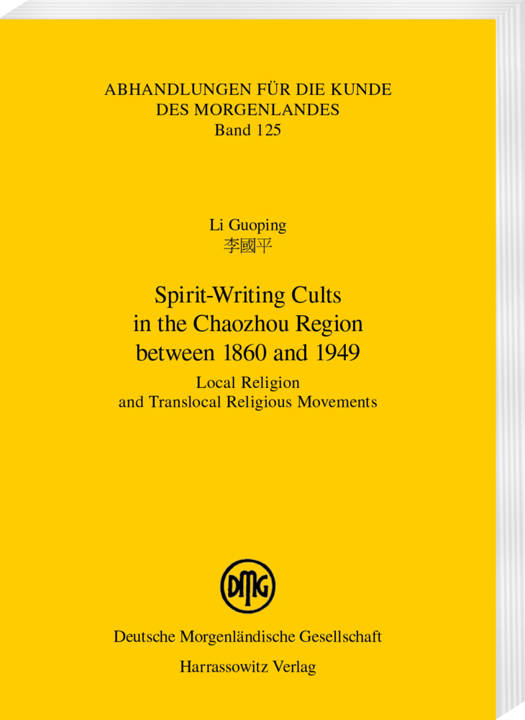
Spirit-Writing Cults in the Chaozhou Region Between 1860 and 1949
Local Religion and Translocal Religious Movements
Guoping Li
€ 135,95
+ 271 punten
Omschrijving
This study explores the rise of the spirit-writing movement in modern China and focuses on the Chaozhou region of Guangdong province (South China). Spirit-writing was a popular technique to connect the human and the spirit world, not unlike the use of the "planchette" in European spiritualism. In spirit-writing seances, two spirit-writers held a stylus to write messages from the gods in a sand tray. From the nineteenth century, spirit-writing cults sprang up throughout China and became a national religious trend in response to the forces of modernity. These cults were centered around a call for moral reform, promoted through spirit-writing, and aimed to reorient traditional values. They developed in the context of disasters, political chaos, and nativist movements. Through the distribution of morality books and the expansion of sectarian groups, spirit-writing cults in different regions shared similarities in their revelations and several core religious themes. The spirit-writing movement was a both local and nationwide phenomenon. Spirit-writing cults developed in the local context and integrated with local society and culture. Therefore, this study considers the Chaozhou spirit-writing movement both as a local phenomenon and as part of a nationwide trend. In addition, this study sheds some light on other specific aspects of Chinese religions. First, it uses many previously unstudied texts to discuss the history of religions in Chaozhou. Second, the spirit-writing movement is critical to our understanding of local religions that we can observe today. Third, the important religious movement Dejiao originated from the Chaozhou spirit-writing movement and was closely related to other spirit-writing cults. Fourth, the Chaozhou case differs distinctly from the spirit-writing movement in Taiwan, which has dominated the research literature so far.
Specificaties
Betrokkenen
- Auteur(s):
- Uitgeverij:
Inhoud
- Aantal bladzijden:
- 268
- Taal:
- Engels
- Reeks:
- Reeksnummer:
- nr. 125
Eigenschappen
- Productcode (EAN):
- 9783447117692
- Verschijningsdatum:
- 24/05/2023
- Uitvoering:
- Paperback
- Formaat:
- Trade paperback (VS)
- Afmetingen:
- 176 mm x 15 mm
- Gewicht:
- 6799 g


Alleen bij Standaard Boekhandel
+ 271 punten op je klantenkaart van Standaard Boekhandel

Beoordelingen
We publiceren alleen reviews die voldoen aan de voorwaarden voor reviews. Bekijk onze voorwaarden voor reviews.