



Bedankt voor het vertrouwen het afgelopen jaar! Om jou te bedanken bieden we GRATIS verzending (in België) aan op alles gedurende de hele maand januari.
- Afhalen na 1 uur in een winkel met voorraad
- In januari gratis thuislevering in België
- Ruim aanbod met 7 miljoen producten
Bedankt voor het vertrouwen het afgelopen jaar! Om jou te bedanken bieden we GRATIS verzending (in België) aan op alles gedurende de hele maand januari.
- Afhalen na 1 uur in een winkel met voorraad
- In januari gratis thuislevering in België
- Ruim aanbod met 7 miljoen producten





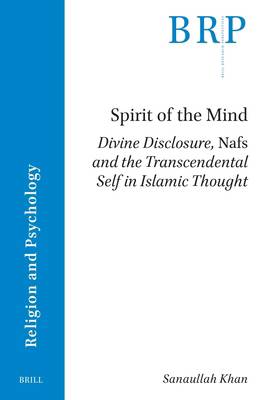
Spirit of the Mind
Divine Disclosure, Nafs and the Transcendental Self in Islamic Thought
Sanaullah Khan
€ 121,45
+ 242 punten
Omschrijving
In Spirit of the Mind, Sanaullah Khan delves into Islamic perspectives on the soul and its implications for spirituality and self-cultivation. Despite varying views on the soul's composition, a shared belief has persisted among theologians, scholars, preachers and reformists that it bears traces of the divine. Thus, drawing closer to God and gaining knowledge of nature involve returning to the soul's natural state of perfection. Central to Islamic thought is the struggle between the soul and the nafs (lower self), embodying carnal desires. In this context, achieving closeness to God requires purifying the soul to control the nafs. Khan traces a genealogy of the Islamic notion of the soul by exploring disturbances of the soul through Greek humoral theory, notions of spiritual weakness as deviation from perfection, the heart representing the seat of the soul, and the soul's aspiration for the divine light (nur) for its purification. Khan reflects on Islamic notions of the self through the tradition of the Perfect Man, which emphasizes spiritual ascent and divine proximity. Overall, the monograph offers a nuanced exploration of the soul's significance in Islamic thought, highlighting what thinkers have considered as the path to divine proximity and enlightenment.
Specificaties
Betrokkenen
- Auteur(s):
- Uitgeverij:
Inhoud
- Aantal bladzijden:
- 76
- Taal:
- Engels
- Reeks:
Eigenschappen
- Productcode (EAN):
- 9789004719026
- Verschijningsdatum:
- 21/11/2024
- Uitvoering:
- Paperback
- Formaat:
- Trade paperback (VS)
- Afmetingen:
- 161 mm x 234 mm
- Gewicht:
- 127 g


Alleen bij Standaard Boekhandel
+ 242 punten op je klantenkaart van Standaard Boekhandel
SOLDEN


Beoordelingen
We publiceren alleen reviews die voldoen aan de voorwaarden voor reviews. Bekijk onze voorwaarden voor reviews.