


- Afhalen na 1 uur in een winkel met voorraad
- Gratis thuislevering in België vanaf € 30
- Ruim aanbod met 7 miljoen producten
- Afhalen na 1 uur in een winkel met voorraad
- Gratis thuislevering in België vanaf € 30
- Ruim aanbod met 7 miljoen producten





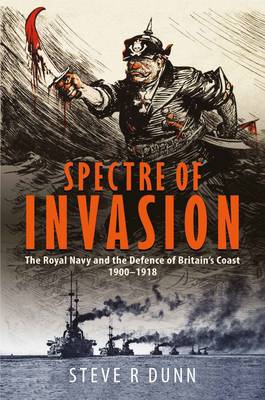
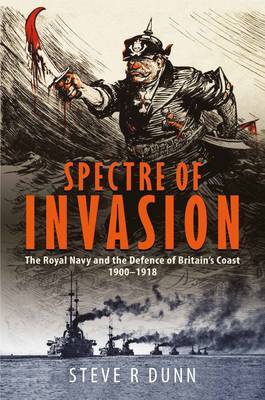
Spectre of Invasion
The Royal Navy and the Defence of Britain's Coast, 1900-1918
Steve Dunn
Hardcover | Engels
€ 34,95
+ 69 punten
Omschrijving
"Dunn's volume is well worth reading, and concludes that today Britain's maritime shield has vanished, with unprotected coasts and sixty-two Royal Navy ships, one quarter of the number of US Coast Guard cutters." - National Maritime Historical Society
By 1900, the British government and public had become gripped by a new and growing fear of invasion, not from traditional enemies such as France, but from Germany. Such terror was driven by lurid books and fanned by newspapers. These anxieties sparked off a fight between those who wanted a defence based on a larger standing army, with conscription to support it, and those who believed the Royal Navy was sufficient to defend the coast and deprecated the expense and role of a standing land force.
With war declared in 1914, Britain's coastline came under attack. Major German raids created terror, and the fear of invasion drove naval and military planning and dispositions to protect Britain's littoral. Coastal towns such as Scarborough, Great Yarmouth, Lowestoft, Southwold and even the Outer Hebrides came under attack and landings by German troops were feared daily. Running battles were fought with these attacking forces and both ships and lives ashore were lost. Spectre of Invasion examines all of the raids made and the success or failure of them, and relates these events from the point of view of naval and civilian participants. It tells the story of the Royal Navy and its role in the defence of the British coast in the First World War and examines the strategic and political developments resultant from invasion fears. And it considers how the plans laid for coastal defence fared under the test of conflict, laying bare what it was like to be part of the battles around the British coast, both as combatant and as citizen. Finally, it looks at Britain's inability to co-ordinate naval and military effort throughout the War.
This is a thought-provoking book which combines a fast-paced narrative with fascinating insights into Britain's predicament in the years leading up to, and through, the First World War. It will appeal to anyone interested in this era of the country's history and the fear on invasion that stalked the country in those years.
By 1900, the British government and public had become gripped by a new and growing fear of invasion, not from traditional enemies such as France, but from Germany. Such terror was driven by lurid books and fanned by newspapers. These anxieties sparked off a fight between those who wanted a defence based on a larger standing army, with conscription to support it, and those who believed the Royal Navy was sufficient to defend the coast and deprecated the expense and role of a standing land force.
With war declared in 1914, Britain's coastline came under attack. Major German raids created terror, and the fear of invasion drove naval and military planning and dispositions to protect Britain's littoral. Coastal towns such as Scarborough, Great Yarmouth, Lowestoft, Southwold and even the Outer Hebrides came under attack and landings by German troops were feared daily. Running battles were fought with these attacking forces and both ships and lives ashore were lost. Spectre of Invasion examines all of the raids made and the success or failure of them, and relates these events from the point of view of naval and civilian participants. It tells the story of the Royal Navy and its role in the defence of the British coast in the First World War and examines the strategic and political developments resultant from invasion fears. And it considers how the plans laid for coastal defence fared under the test of conflict, laying bare what it was like to be part of the battles around the British coast, both as combatant and as citizen. Finally, it looks at Britain's inability to co-ordinate naval and military effort throughout the War.
This is a thought-provoking book which combines a fast-paced narrative with fascinating insights into Britain's predicament in the years leading up to, and through, the First World War. It will appeal to anyone interested in this era of the country's history and the fear on invasion that stalked the country in those years.
Specificaties
Betrokkenen
- Auteur(s):
- Uitgeverij:
Inhoud
- Aantal bladzijden:
- 352
- Taal:
- Engels
Eigenschappen
- Productcode (EAN):
- 9781399039901
- Verschijningsdatum:
- 12/06/2025
- Uitvoering:
- Hardcover
- Formaat:
- Genaaid
- Afmetingen:
- 154 mm x 236 mm
- Gewicht:
- 929 g


Alleen bij Standaard Boekhandel
+ 69 punten op je klantenkaart van Standaard Boekhandel
Cadeau

AANGERADEN


Beoordelingen
We publiceren alleen reviews die voldoen aan de voorwaarden voor reviews. Bekijk onze voorwaarden voor reviews.