


- Afhalen na 1 uur in een winkel met voorraad
- Gratis thuislevering in België vanaf € 30
- Ruim aanbod met 7 miljoen producten
- Afhalen na 1 uur in een winkel met voorraad
- Gratis thuislevering in België vanaf € 30
- Ruim aanbod met 7 miljoen producten





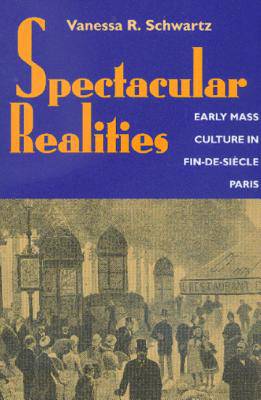
Spectacular Realities
Early Mass Culture in Fin-De-Siècle Paris
Vanessa R Schwartz
Paperback | Engels
€ 54,45
+ 108 punten
Omschrijving
During the second half of the nineteenth century, Paris emerged as the entertainment capital of the world. The sparkling redesigned city fostered a culture of energetic crowd-pleasing and multi-sensory amusements that would apprehend and represent real life as spectacle.
Vanessa R. Schwartz examines the explosive popularity of such phenomena as the boulevards, the mass press, public displays of corpses at the morgue, wax museums, panoramas, and early film. Drawing on a wide range of written and visual materials, including private and business archives, and working at the intersections of art history, literature, and cinema studies, Schwartz argues that "spectacular realities" are part of the foundation of modern mass society. She refutes the notion that modern life produced an unending parade of distractions leading to alienation, and instead suggests that crowds gathered not as dislocated spectators but as members of a new kind of crowd, one united in pleasure rather than protest.
Vanessa R. Schwartz examines the explosive popularity of such phenomena as the boulevards, the mass press, public displays of corpses at the morgue, wax museums, panoramas, and early film. Drawing on a wide range of written and visual materials, including private and business archives, and working at the intersections of art history, literature, and cinema studies, Schwartz argues that "spectacular realities" are part of the foundation of modern mass society. She refutes the notion that modern life produced an unending parade of distractions leading to alienation, and instead suggests that crowds gathered not as dislocated spectators but as members of a new kind of crowd, one united in pleasure rather than protest.
Specificaties
Betrokkenen
- Auteur(s):
- Uitgeverij:
Inhoud
- Aantal bladzijden:
- 244
- Taal:
- Engels
Eigenschappen
- Productcode (EAN):
- 9780520221680
- Verschijningsdatum:
- 3/08/1999
- Uitvoering:
- Paperback
- Formaat:
- Trade paperback (VS)
- Afmetingen:
- 150 mm x 226 mm
- Gewicht:
- 362 g


Alleen bij Standaard Boekhandel
+ 108 punten op je klantenkaart van Standaard Boekhandel
AANGERADEN


Beoordelingen
We publiceren alleen reviews die voldoen aan de voorwaarden voor reviews. Bekijk onze voorwaarden voor reviews.