


- Afhalen na 1 uur in een winkel met voorraad
- Gratis thuislevering in België vanaf € 30
- Ruim aanbod met 7 miljoen producten
- Afhalen na 1 uur in een winkel met voorraad
- Gratis thuislevering in België vanaf € 30
- Ruim aanbod met 7 miljoen producten





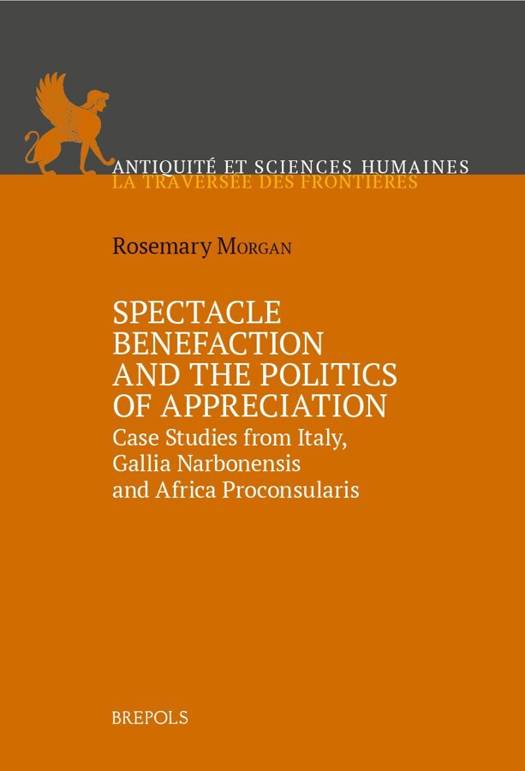
Spectacle Benefaction and the Politics of Appreciation
Rosemary Morgan
€ 90,10
+ 180 punten
Omschrijving
In the remotest corners of the Roman Empire, large crowds were as beguiled by spectacles as their Roman counterparts. Provincial spectacles however, did not share the technical wonders of flying machines, elephant dressage and synchronised swimming seen at imperial extravaganzas. Is it this lack of the sensational that accounts for the relative paucity of scholarly attention paid to regional spectacles and in particular, their sponsors? When spectacles are viewed purely as entertainment, the messy realities of institutionalized social, economic and political power that regulated them are obscured. A clearer understanding of the spectacle can therefore be achieved by contextualizing it in the big picture of regional and provincial life against the backdrop of Roman power and control. The spectacle itself was highly political in its aims and intent. Access to sponsorship of a spectacle similarly relied on hierarchies of political power and privilege, and consequently required strategic negotiation of candidacy, promises, expenditure and recognition. Rivalry, competition and emulation was endemic. This epigraphic analysis, focusing on the western Roman Empire (Italy, Gaul and North Africa) during the Imperial period, identifies the milieux of provincial sponsors, their strategies and quest for public honours.
Specificaties
Betrokkenen
- Auteur(s):
- Uitgeverij:
Inhoud
- Aantal bladzijden:
- 358
- Taal:
- Frans
- Reeks:
- Reeksnummer:
- nr. 12
Eigenschappen
- Productcode (EAN):
- 9782503613703
- Verschijningsdatum:
- 31/07/2025
- Uitvoering:
- Paperback
- Formaat:
- Trade paperback (VS)
- Gewicht:
- 1297 g


Alleen bij Standaard Boekhandel
+ 180 punten op je klantenkaart van Standaard Boekhandel
CADEAU

AANGERADEN


Beoordelingen
We publiceren alleen reviews die voldoen aan de voorwaarden voor reviews. Bekijk onze voorwaarden voor reviews.