


- Afhalen na 1 uur in een winkel met voorraad
- Gratis thuislevering in België vanaf € 30
- Ruim aanbod met 7 miljoen producten
- Afhalen na 1 uur in een winkel met voorraad
- Gratis thuislevering in België vanaf € 30
- Ruim aanbod met 7 miljoen producten





€ 74,45
+ 148 punten
Eenvoudig bestellen
Veilig betalen


Gratis thuislevering vanaf € 30 (via bpost)
Gratis levering in je Standaard Boekhandel
Omschrijving
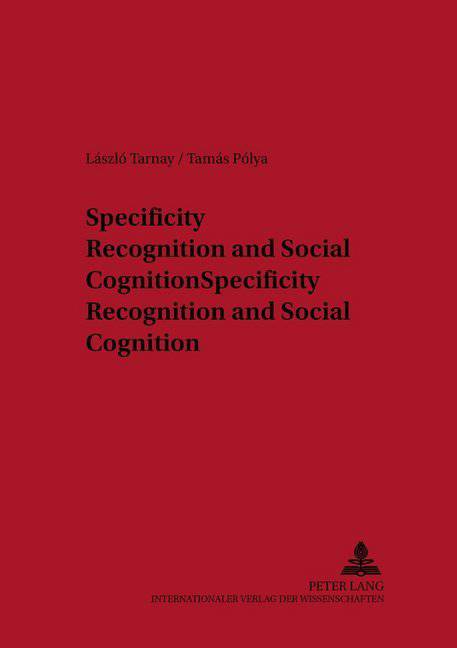
Mainstream cognitive science claims that the essence of human cognition is its capacity to categorize the world into stones, trees, friends and foes, elements that form more or less homogeneous groups. But it has seldom been asked how individual entities like one's father or a work of art are in their uniqueness (or specificity) represented mentally, if at all. This book tackles that problem by surveying data and theories coming from various fields such as evolutionary biology, psychology, neurology and philosophy, and fitting them into a coherent, new theoretical framework of a broadly anti-representationalist ilk. In order to construct the framework, the authors introduce a series of new notions, reshape or interpret many already in currency (such as affordances, categories, misrepresentation, conceptual and non-conceptual content, aspect seeing, the analog-digital distinction and the evolutionary adaptivity of art), and formulate five criteria on the basis of which what is and what is not mentally represented can clearly be told apart. The book will be of interest to cognitive scientists in general.
Specificaties
Betrokkenen
- Auteur(s):
- Uitgeverij:
Inhoud
- Aantal bladzijden:
- 349
- Taal:
- Engels
- Reeks:
- Reeksnummer:
- nr. 16
Eigenschappen
- Productcode (EAN):
- 9783631502266
- Verschijningsdatum:
- 3/02/2004
- Uitvoering:
- Paperback
- Formaat:
- Trade paperback (VS)
- Afmetingen:
- 148 mm x 210 mm
- Gewicht:
- 479 g


Alleen bij Standaard Boekhandel
+ 148 punten op je klantenkaart van Standaard Boekhandel
CADEAU

AANGERADEN


Beoordelingen
We publiceren alleen reviews die voldoen aan de voorwaarden voor reviews. Bekijk onze voorwaarden voor reviews.