


- Afhalen na 1 uur in een winkel met voorraad
- Gratis thuislevering in België vanaf € 30
- Ruim aanbod met 7 miljoen producten
- Afhalen na 1 uur in een winkel met voorraad
- Gratis thuislevering in België vanaf € 30
- Ruim aanbod met 7 miljoen producten





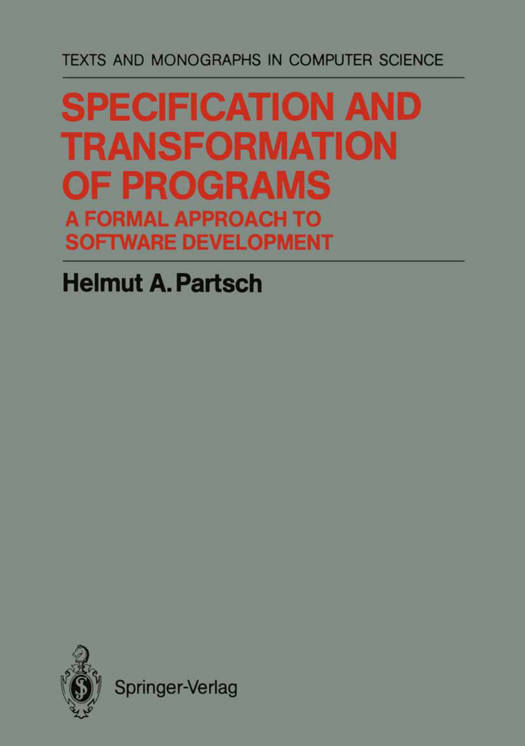
Specification and Transformation of Programs
A Formal Approach to Software Development
Helmut A Partsch
€ 53,45
+ 106 punten
Uitvoering
Eenvoudig bestellen
Veilig betalen


Gratis thuislevering vanaf € 30 (via bpost)
Gratis levering in je Standaard Boekhandel
Omschrijving
"Specification and transformation of programs" is short for a methodology of software development where, from a formal specification of a problem to be solved, programs correctly solving that problem are constructed by stepwise application of formal, semantics-preserving transformation rules. The approach considers programming as a formal activity. Consequently, it requires some mathematical maturity and, above all, the will to try something new. A somewhat experienced programmer or a third- or fourth-year student in computer science should be able to master most of this material - at least, this is the level I have aimed at. This book is primarily intended as a general introductory textbook on transformational methodology. As with any methodology, reading and understanding is necessary but not sufficient. Therefore, most of the chapters contain a set of exercises for practising as homework. Solutions to these exercises exist and can, in principle, be obtained at nominal cost from the author upon request on appropriate letterhead. In addition, the book also can be seen as a comprehensive account of the particular transformational methodology developed within the Munich CIP project.
Specificaties
Betrokkenen
- Auteur(s):
- Uitgeverij:
Inhoud
- Aantal bladzijden:
- 493
- Taal:
- Engels
- Reeks:
Eigenschappen
- Productcode (EAN):
- 9783540523567
- Verschijningsdatum:
- 5/07/1990
- Uitvoering:
- Hardcover
- Formaat:
- Genaaid
- Afmetingen:
- 178 mm x 254 mm
- Gewicht:
- 1106 g


Alleen bij Standaard Boekhandel
+ 106 punten op je klantenkaart van Standaard Boekhandel
CADEAU

AANGERADEN


Beoordelingen
We publiceren alleen reviews die voldoen aan de voorwaarden voor reviews. Bekijk onze voorwaarden voor reviews.