



- Afhalen na 1 uur in een winkel met voorraad
- In januari gratis thuislevering in België
- Ruim aanbod met 7 miljoen producten
- Afhalen na 1 uur in een winkel met voorraad
- In januari gratis thuislevering in België
- Ruim aanbod met 7 miljoen producten





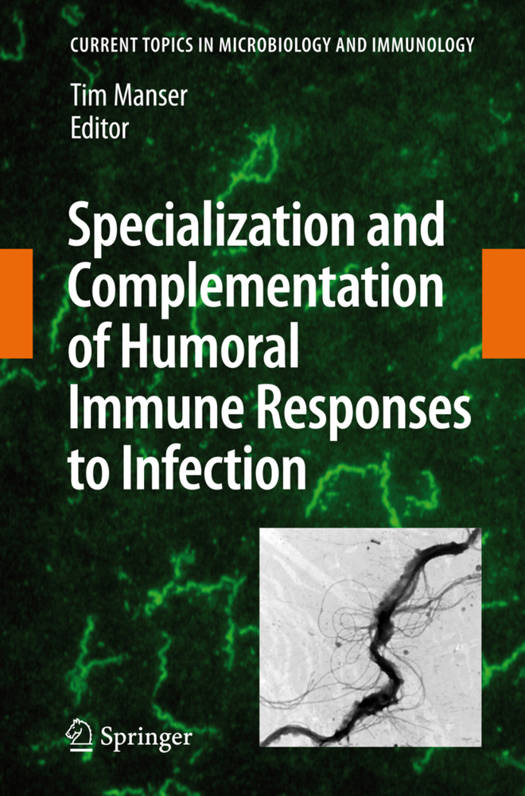
Specialization and Complementation of Humoral Immune Responses to Infection
€ 153,95
+ 307 punten
Omschrijving
The importance of specific antibodies for the clearance of and long-term resistance to many infectious pathogens has long been appreciated. Moreover, the role in these processes of the different antibody heavy chain isotypes, each tailored to induce diverse effector pathways such as those mediated by complement and Fc receptors and to promote antibody localization in distinct regions of the body, is well established. Insights into the molecular mechanism of isotype class switching showed that during an immune response B cells could change the heavy chain of the antibody they produced, without influencing the structure and specificity of the antigen-binding variable regions of this antibody (Honjo 1983). More recently, the germinal center pathway of B cell development was elucidated, in which antibody variable regions undergo extensive structural alteration via hypermutation followed by stringent phenotypic selection (Berek 1992; Kelsoe 1995). Emerging from this pathway are memory B cells and long-lived antibody-forming cells that express antigen receptors and secrete antibodies, respectively, with increased affinity and specificity for the foreign antigen. Taken together, these findings led to a view of the acquisition of antibody-mediated resistance to infectious pathogens in mammals that involved extensive somatic matu- tion of antibody heavy and variable region structure and function during the immune response. This was in keeping with the concept that the B cell compartment comprises a major arm of the adaptive immune system. Such a view was reinforced by molecular analyses of antiviral antibody responses (Zinkernagel 1996).
Specificaties
Betrokkenen
- Uitgeverij:
Inhoud
- Aantal bladzijden:
- 162
- Taal:
- Engels
- Reeks:
- Reeksnummer:
- nr. 319
Eigenschappen
- Productcode (EAN):
- 9783642093135
- Verschijningsdatum:
- 25/11/2010
- Uitvoering:
- Paperback
- Afmetingen:
- 155 mm x 9 mm
- Gewicht:
- 277 g

Alleen bij Standaard Boekhandel
+ 307 punten op je klantenkaart van Standaard Boekhandel
Cadeau

AANGERADEN


Beoordelingen
We publiceren alleen reviews die voldoen aan de voorwaarden voor reviews. Bekijk onze voorwaarden voor reviews.