


- Afhalen na 1 uur in een winkel met voorraad
- Gratis thuislevering in België vanaf € 30
- Ruim aanbod met 7 miljoen producten
- Afhalen na 1 uur in een winkel met voorraad
- Gratis thuislevering in België vanaf € 30
- Ruim aanbod met 7 miljoen producten





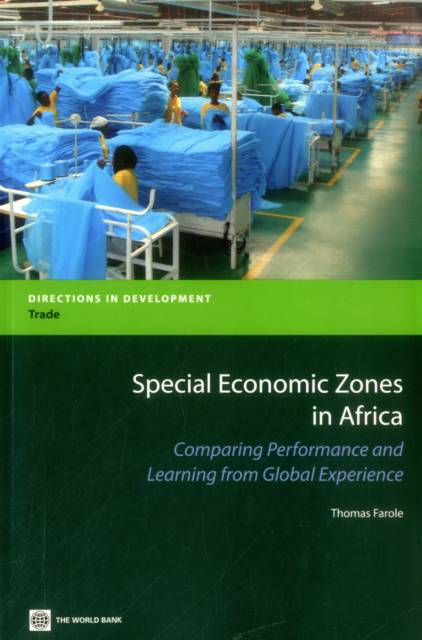
Special Economic Zones in Africa
Comparing Performance and Learning from Global Experiences
Thomas Farole
€ 59,45
+ 118 punten
Omschrijving
This book, designed for policymakers, academics and researchers, and SEZ program practitioners, provides the first systematic and comprehensive analysis of SEZ programs in Sub-Saharan Africa. It is the result of detailed surveys and case studies conducted during 2009 in ten developing countries, including six in Sub-Saharan Africa. The book provides quantitative evidence of the performance of SEZs, and of the factors which contribute to that performance, highlighting the critical importance not just of the SEZ itself but of the wider national investment climate in which it functions. It also provides a comprehensive guide to the key policy questions that confront governments establishing SEZ programs, including: if and when to launch an SEZ program, what form of SEZ is most appropriate, and how to go about implementing it. Among the most important findings from the study that is stressed in the book is the shift from traditional enclave models of zones to SEZs that are integrated - with national trade and industrial strategies, with core trade and social infrastructure, with domestic suppliers, and with local labor markets. Although the book focuses primarily on the experience of Sub-Saharan Africa, its lessons will be applicable to developing countries around the world.
Specificaties
Betrokkenen
- Auteur(s):
- Uitgeverij:
Inhoud
- Aantal bladzijden:
- 324
- Taal:
- Engels
- Reeks:
Eigenschappen
- Productcode (EAN):
- 9780821386385
- Verschijningsdatum:
- 22/02/2011
- Uitvoering:
- Paperback
- Formaat:
- Trade paperback (VS)
- Afmetingen:
- 150 mm x 226 mm
- Gewicht:
- 385 g


Alleen bij Standaard Boekhandel
+ 118 punten op je klantenkaart van Standaard Boekhandel
Cadeau

AANGERADEN


Beoordelingen
We publiceren alleen reviews die voldoen aan de voorwaarden voor reviews. Bekijk onze voorwaarden voor reviews.