


- Afhalen na 1 uur in een winkel met voorraad
- Gratis thuislevering in België vanaf € 30
- Ruim aanbod met 7 miljoen producten
- Afhalen na 1 uur in een winkel met voorraad
- Gratis thuislevering in België vanaf € 30
- Ruim aanbod met 7 miljoen producten





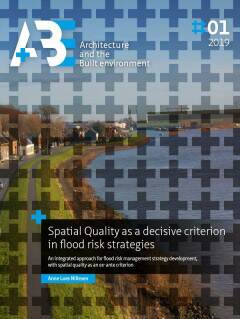
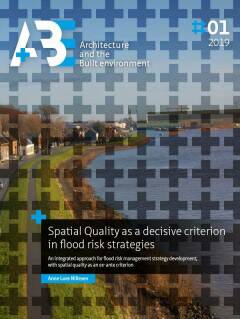
Spatial Quality as a decisive criterion in flood risk strategies
An integrated approach for flood risk management strategy development, with spatial quality as an ex-ante criterion
Anne Loes Nillesen
€ 29,95
+ 59 punten
Eenvoudig bestellen
Veilig betalen


Gratis thuislevering vanaf € 30 (via bpost)
Gratis levering in je Standaard Boekhandel
Omschrijving
The role of the designer in flood risk management strategy development is currently often restricted to the important but limited task of optimally embedding technical interventions, which are themselves derivatives of system level flood risk strategies that are developed at an earlier stage, in their local surroundings. During this thesis research, an integrated approach is developed in which spatial quality can already be included in the regional flood risk management strategy development and thus can become a decisive ‘ex-ante’ aspect of flood risk management strategy development. The key principle to this approach is the inclusion of a range of interchangeable (effective) flood risk reduction interventions at varying locations so that the criterion of spatial quality can become decisive in flood risk management strategy development.
Specificaties
Betrokkenen
- Auteur(s):
- Uitgeverij:
Inhoud
- Aantal bladzijden:
- 200
- Taal:
- Engels
- Reeks:
Eigenschappen
- Productcode (EAN):
- 9789463661218
- Verschijningsdatum:
- 7/01/2019
- Uitvoering:
- Paperback
- Afmetingen:
- 210 mm x 279 mm
- Gewicht:
- 560 g


Alleen bij Standaard Boekhandel
+ 59 punten op je klantenkaart van Standaard Boekhandel
CADEAU

AANGERADEN


Beoordelingen
We publiceren alleen reviews die voldoen aan de voorwaarden voor reviews. Bekijk onze voorwaarden voor reviews.