


- Afhalen na 1 uur in een winkel met voorraad
- Gratis thuislevering in België vanaf € 30
- Ruim aanbod met 7 miljoen producten
- Afhalen na 1 uur in een winkel met voorraad
- Gratis thuislevering in België vanaf € 30
- Ruim aanbod met 7 miljoen producten





€ 29,95
+ 59 punten
Omschrijving
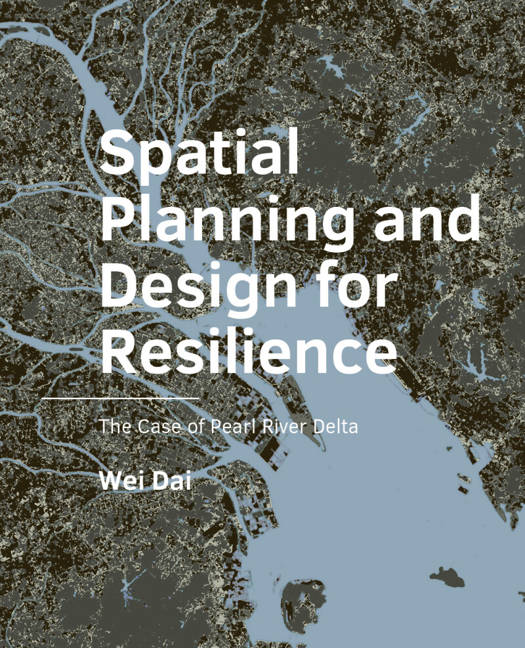
Faced with the highly overlapping factors of the external disturbances -- natural disasters caused by extreme climate change, and internal interactions -- the contradiction between natural conditions and rapid urbanization, traditional spatial planning and design used to pursue economic development could not be flexible enough to respond to the dynamic and uncertain future of the Pearl River Delta (PRD).
Therefore, spatial planning and design should pay great attention to the fragile natural base layer and unexpected external disturbances that will negatively impact the PRD caused by increasing natural disasters, such as flooding and land subsidence situation. Based on the idea of spatial resilience, this doctoral dissertation aims to give an answer to the research question:
What are the theories and methods of spatial planning and design for resilience? How is it possible to apply the theory and method of spatial planning and design for resilience to the PRD?
Five major research contents are conducted. First of all, literatures on exploring the physical context, the crucial stages of spatial transformation, as well as spatial planning and design practices of the PRD are reviewed. Secondly, the theory of spatial planning and design for resilience is systematically researched. Thirdly, implementation method for spatial planning and design for resilience is provided. Fourthly, the empirical research of the theory and method of spatial planning and design for resilient PRD is conducted and possible new schemes are produced. Fifthly, the corresponding principles and strategies of resilient flood control and drainage on Hengli Island are proposed. The research outcomes obtained from this doctoral dissertation can be possibly applied to the further spatial planning and design practice for establishing a resilient PRD.
Therefore, spatial planning and design should pay great attention to the fragile natural base layer and unexpected external disturbances that will negatively impact the PRD caused by increasing natural disasters, such as flooding and land subsidence situation. Based on the idea of spatial resilience, this doctoral dissertation aims to give an answer to the research question:
What are the theories and methods of spatial planning and design for resilience? How is it possible to apply the theory and method of spatial planning and design for resilience to the PRD?
Five major research contents are conducted. First of all, literatures on exploring the physical context, the crucial stages of spatial transformation, as well as spatial planning and design practices of the PRD are reviewed. Secondly, the theory of spatial planning and design for resilience is systematically researched. Thirdly, implementation method for spatial planning and design for resilience is provided. Fourthly, the empirical research of the theory and method of spatial planning and design for resilient PRD is conducted and possible new schemes are produced. Fifthly, the corresponding principles and strategies of resilient flood control and drainage on Hengli Island are proposed. The research outcomes obtained from this doctoral dissertation can be possibly applied to the further spatial planning and design practice for establishing a resilient PRD.
Specificaties
Betrokkenen
- Auteur(s):
- Uitgeverij:
Inhoud
- Aantal bladzijden:
- 364
- Taal:
- Engels
- Reeks:
Eigenschappen
- Productcode (EAN):
- 9789463663915
- Verschijningsdatum:
- 19/02/2021
- Uitvoering:
- Paperback
- Afmetingen:
- 191 mm x 235 mm
- Gewicht:
- 843 g


Alleen bij Standaard Boekhandel
+ 59 punten op je klantenkaart van Standaard Boekhandel
Cadeau

AANGERADEN


Beoordelingen
We publiceren alleen reviews die voldoen aan de voorwaarden voor reviews. Bekijk onze voorwaarden voor reviews.