


- Afhalen na 1 uur in een winkel met voorraad
- Gratis thuislevering in België vanaf € 30
- Ruim aanbod met 7 miljoen producten
- Afhalen na 1 uur in een winkel met voorraad
- Gratis thuislevering in België vanaf € 30
- Ruim aanbod met 7 miljoen producten





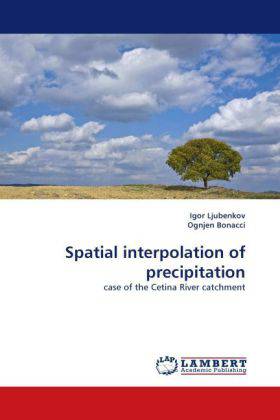
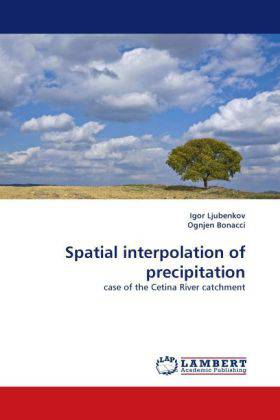
Spatial interpolation of precipitation
case of the Cetina River catchment
Igor Ljubenkov, Ognjen Bonacci
Paperback | Engels
€ 67,45
+ 134 punten
Omschrijving
This book deals with the spatial estimation of storm, monthly and annual precipitation in the Cetina River catchment. The river catchment is a highland area of about 4140 km2, divided by Dinara Mountain into two parts. The western part has area of about 1720 km2. It is "direct" or topographic catchment, almost entirely situated in Croatia, while climate is under strong influence of the Adriatic Sea (Mediterranean climate). The eastern part of the catchment (about 2420 km2) is referred to as the "indirect" catchment. It is mainly situated in Bosnia and Herzegovina, with a continental climate. Therefore, precipitation regime is very complex and variable over the catchment area. A few conventional methods (arithmetic average, inverse square distance method, Thiessen method, isohyetal method and hypsometric method) were used to calculate average precipitation of each part of the catchment, while geostatistical methods (ordinary kriging, universal kriging and kriging with external drift) were used to calculate precipitation maps and statistical accuracy.
Specificaties
Betrokkenen
- Auteur(s):
- Uitgeverij:
Inhoud
- Aantal bladzijden:
- 96
- Taal:
- Engels
Eigenschappen
- Productcode (EAN):
- 9783843362665
- Verschijningsdatum:
- 14/10/2010
- Uitvoering:
- Paperback
- Afmetingen:
- 152 mm x 229 mm
- Gewicht:
- 150 g


Alleen bij Standaard Boekhandel
+ 134 punten op je klantenkaart van Standaard Boekhandel
Wedstrijd


Beoordelingen
We publiceren alleen reviews die voldoen aan de voorwaarden voor reviews. Bekijk onze voorwaarden voor reviews.