


- Afhalen na 1 uur in een winkel met voorraad
- Gratis thuislevering in België vanaf € 30
- Ruim aanbod met 7 miljoen producten
- Afhalen na 1 uur in een winkel met voorraad
- Gratis thuislevering in België vanaf € 30
- Ruim aanbod met 7 miljoen producten





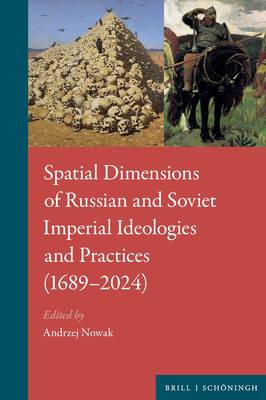
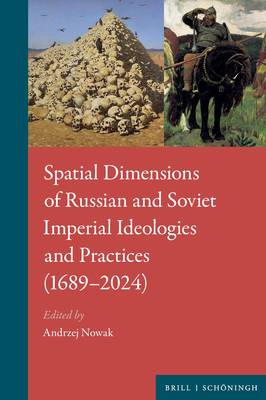
Spatial Dimensions of Russian and Soviet Imperial Ideologies and Practices (1689-2024)
€ 68,45
+ 136 punten
Omschrijving
The study examines the Russian "Großraum" Geopolitical concepts and spatial imaginaries of Russia - Imperial, Soviet, and Post-Soviet. The authors discuss the spatial organization of Russia - encompassing internal colonization, inner hierarchies, and territorial-administrative structures -, the vectors of Russian expansion, "Russkiy Mir" in and outside of the empire, the 'near and far abroad' concept, as well as "geocultural" vectors of Russian/Soviet/Russian "missions", from its religious mission to its "mission civilisatrice". From Peter I and Tolstoy to Zakhar Prilepin and Georgy Shchedrovitsky, different angles and aspects of Russian mental maps and "cultural geography" are analyzed in this kaleidoscopic study which elucidates the Russia of Catherine II to that of Vladimir Putin.
Specificaties
Betrokkenen
- Uitgeverij:
Inhoud
- Aantal bladzijden:
- 540
- Taal:
- Engels
- Reeks:
- Reeksnummer:
- nr. 4
Eigenschappen
- Productcode (EAN):
- 9783506705365
- Verschijningsdatum:
- 30/11/2026
- Uitvoering:
- Hardcover
- Formaat:
- Genaaid
- Afmetingen:
- 155 mm x 235 mm

Alleen bij Standaard Boekhandel
+ 136 punten op je klantenkaart van Standaard Boekhandel
Cadeau

AANGERADEN


Beoordelingen
We publiceren alleen reviews die voldoen aan de voorwaarden voor reviews. Bekijk onze voorwaarden voor reviews.