


- Afhalen na 1 uur in een winkel met voorraad
- Gratis thuislevering in België vanaf € 30
- Ruim aanbod met 7 miljoen producten
- Afhalen na 1 uur in een winkel met voorraad
- Gratis thuislevering in België vanaf € 30
- Ruim aanbod met 7 miljoen producten





€ 48,95
+ 97 punten
Omschrijving
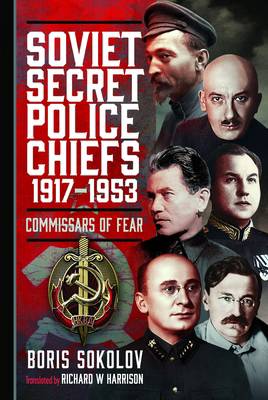
Examines the lives, careers, and tragic fates of Stalin's six secret police leaders.
Soviet Secret Police Chiefs, 1926-1953. Commissars of Fear is a combined edition of two works by Boris V. Sokolov, detailing the lives and careers of the six Soviet secret police heads from Dzerzhinskii to Abakumov. The book brings together The People's Commissars of Fear and its expanded version The People's Commissars of Terror, offering a comprehensive view of the men who led Stalin's apparatus of repression.
This reflection on the Soviet era, particularly from the 1920s to the 1950s under Stalin, challenges romanticized views of the past by revealing it as a grim and tragic period. The fates of the six Soviet secret police chiefs--once powerful figures of state repression--serve as stark illustrations. These men, who were responsible for countless deaths during the Great Terror, ultimately shared the fate of their victims, executed by the same regime they served. The author stresses that they were not inherently monstrous but ordinary individuals shaped--and corrupted--by a criminal system. Had historical circumstances differed, they might have lived quiet lives. The positions they held sealed their destinies, making them too dangerous for the regime to keep alive due to the blood they had on their hands, which mirrored that of the top party leadership. Their tragic end highlights how power not only corrupted but consumed its own agents. The author concludes that it was not personal evil but the systemic, criminal nature of Soviet power that transformed these otherwise mediocre men into enduring symbols of terror.
A note of gratitude is extended to individuals and institutions who supported the book's research, especially the Russian State Archive of Socio-Political History (RGASPI).
Soviet Secret Police Chiefs, 1926-1953. Commissars of Fear is a combined edition of two works by Boris V. Sokolov, detailing the lives and careers of the six Soviet secret police heads from Dzerzhinskii to Abakumov. The book brings together The People's Commissars of Fear and its expanded version The People's Commissars of Terror, offering a comprehensive view of the men who led Stalin's apparatus of repression.
This reflection on the Soviet era, particularly from the 1920s to the 1950s under Stalin, challenges romanticized views of the past by revealing it as a grim and tragic period. The fates of the six Soviet secret police chiefs--once powerful figures of state repression--serve as stark illustrations. These men, who were responsible for countless deaths during the Great Terror, ultimately shared the fate of their victims, executed by the same regime they served. The author stresses that they were not inherently monstrous but ordinary individuals shaped--and corrupted--by a criminal system. Had historical circumstances differed, they might have lived quiet lives. The positions they held sealed their destinies, making them too dangerous for the regime to keep alive due to the blood they had on their hands, which mirrored that of the top party leadership. Their tragic end highlights how power not only corrupted but consumed its own agents. The author concludes that it was not personal evil but the systemic, criminal nature of Soviet power that transformed these otherwise mediocre men into enduring symbols of terror.
A note of gratitude is extended to individuals and institutions who supported the book's research, especially the Russian State Archive of Socio-Political History (RGASPI).
Specificaties
Betrokkenen
- Auteur(s):
- Vertaler(s):
- Uitgeverij:
Inhoud
- Aantal bladzijden:
- 392
- Taal:
- Engels
Eigenschappen
- Productcode (EAN):
- 9781036101688
- Verschijningsdatum:
- 30/12/2025
- Uitvoering:
- Hardcover
- Formaat:
- Genaaid
- Afmetingen:
- 158 mm x 236 mm
- Gewicht:
- 657 g


Alleen bij Standaard Boekhandel
+ 97 punten op je klantenkaart van Standaard Boekhandel
Cadeau

AANGERADEN


Beoordelingen
We publiceren alleen reviews die voldoen aan de voorwaarden voor reviews. Bekijk onze voorwaarden voor reviews.