


- Afhalen na 1 uur in een winkel met voorraad
- Gratis thuislevering in België vanaf € 30
- Ruim aanbod met 7 miljoen producten
- Afhalen na 1 uur in een winkel met voorraad
- Gratis thuislevering in België vanaf € 30
- Ruim aanbod met 7 miljoen producten





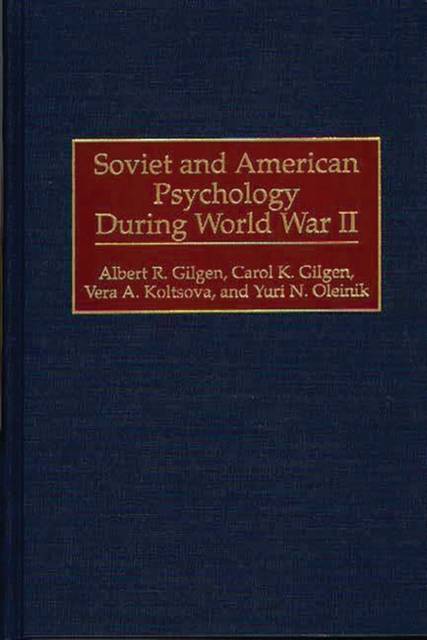
Soviet and American Psychology During World War II
Albert R Gilgen, Carol K Gilgen, Vera Koltsova, Yuri Oleinik
€ 169,95
+ 339 punten
Omschrijving
This book compares the influence of the period leading up to World War II and of the war itself on the discipline of psychology in two major, but very different countries. During the 1930s, Soviet psychologists were formally isolated from developments in Western psychology by the ideological requirements of the Communist Party; in the United States, a vast variety of topics was being researched. When the war began, the discipline in the Soviet Union turned increasingly toward specialized topics, such as the rehabilitation of the wounded, ways to improve morale, and the psychological basis of color-camouflage. American psychologists, on the other hand, applied their psychometric and clinical skills to military needs. With the coming of glasnost, American and Russian psychologists were able to collaborate to create the first thorough examinations of the state of wartime psychology in these countries. Of interest to all students and researchers of the history of psychology, psychological theory, and the history of World War II.
Specificaties
Betrokkenen
- Auteur(s):
- Uitgeverij:
Inhoud
- Aantal bladzijden:
- 264
- Taal:
- Engels
- Reeks:
Eigenschappen
- Productcode (EAN):
- 9780313287947
- Verschijningsdatum:
- 30/10/1997
- Uitvoering:
- Hardcover
- Formaat:
- Genaaid
- Afmetingen:
- 163 mm x 243 mm
- Gewicht:
- 594 g


Alleen bij Standaard Boekhandel
+ 339 punten op je klantenkaart van Standaard Boekhandel
Cadeau

AANGERADEN


Beoordelingen
We publiceren alleen reviews die voldoen aan de voorwaarden voor reviews. Bekijk onze voorwaarden voor reviews.