


- Afhalen na 1 uur in een winkel met voorraad
- Gratis thuislevering in België vanaf € 30
- Ruim aanbod met 7 miljoen producten
- Afhalen na 1 uur in een winkel met voorraad
- Gratis thuislevering in België vanaf € 30
- Ruim aanbod met 7 miljoen producten





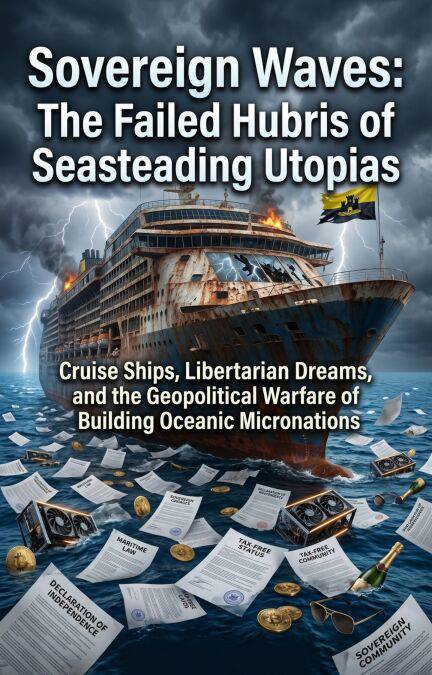
Sovereign Waves: The Failed Hubris of Seasteading Utopias E-BOOK
Cruise Ships, Libertarian Dreams, and the Geopolitical Warfare of Building Oceanic Micronations
Andrew Powell
E-book | Engels
€ 4,99
+ 4 punten
Omschrijving
What happens when wealthy Silicon Valley libertarians and cryptocurrency millionaires attempt to buy an abandoned cruise ship, anchor it in international waters, and declare it a completely sovereign, tax-free, unregulated utopia? The disastrous saga of the MS Satoshi and the broader Seasteading movement is a fascinating collision of ideological hubris and unforgiving maritime reality.
Driven by a desire to escape government taxation and regulation, the Seasteading Institute has spent decades trying to build floating cities. In 2020, crypto-enthusiasts purchased a massive cruise ship, renamed it the MS Satoshi, and planned to anchor it off the coast of Panama as a permanent floating crypto-hub. However, the dream instantly shattered against the ironclad bureaucracy of global maritime law. No international insurance company would underwrite a stateless, stationary vessel. Panama refused to grant it legal jurisdiction, and the ship could not even legally discharge its own sewage. Within months, the utopian vessel was sold for scrap metal.
This sharp geopolitical and sociological analysis deconstructs the fantasy of the oceanic frontier. It explores the extreme engineering costs of floating architecture, the inescapable web of international maritime treaties, and the realization that true sovereignty requires a military, not just a Bitcoin wallet.
Face the brutal reality of the open ocean. The Seasteading failures prove that trying to build a society completely free from government regulation only highlights how heavily we rely on it to survive.
Driven by a desire to escape government taxation and regulation, the Seasteading Institute has spent decades trying to build floating cities. In 2020, crypto-enthusiasts purchased a massive cruise ship, renamed it the MS Satoshi, and planned to anchor it off the coast of Panama as a permanent floating crypto-hub. However, the dream instantly shattered against the ironclad bureaucracy of global maritime law. No international insurance company would underwrite a stateless, stationary vessel. Panama refused to grant it legal jurisdiction, and the ship could not even legally discharge its own sewage. Within months, the utopian vessel was sold for scrap metal.
This sharp geopolitical and sociological analysis deconstructs the fantasy of the oceanic frontier. It explores the extreme engineering costs of floating architecture, the inescapable web of international maritime treaties, and the realization that true sovereignty requires a military, not just a Bitcoin wallet.
Face the brutal reality of the open ocean. The Seasteading failures prove that trying to build a society completely free from government regulation only highlights how heavily we rely on it to survive.
Specificaties
Betrokkenen
- Auteur(s):
- Uitgeverij:
Inhoud
- Aantal bladzijden:
- 171
- Taal:
- Engels
Eigenschappen
- Productcode (EAN):
- 9783565466399
- Verschijningsdatum:
- 28/05/2026
- Uitvoering:
- E-book
- Formaat:
- ePub


Alleen bij Standaard Boekhandel
+ 4 punten op je klantenkaart van Standaard Boekhandel
Cadeau

AANGERADEN


Beoordelingen
We publiceren alleen reviews die voldoen aan de voorwaarden voor reviews. Bekijk onze voorwaarden voor reviews.