


- Afhalen na 1 uur in een winkel met voorraad
- Gratis thuislevering in België vanaf € 30
- Ruim aanbod met 7 miljoen producten
- Afhalen na 1 uur in een winkel met voorraad
- Gratis thuislevering in België vanaf € 30
- Ruim aanbod met 7 miljoen producten





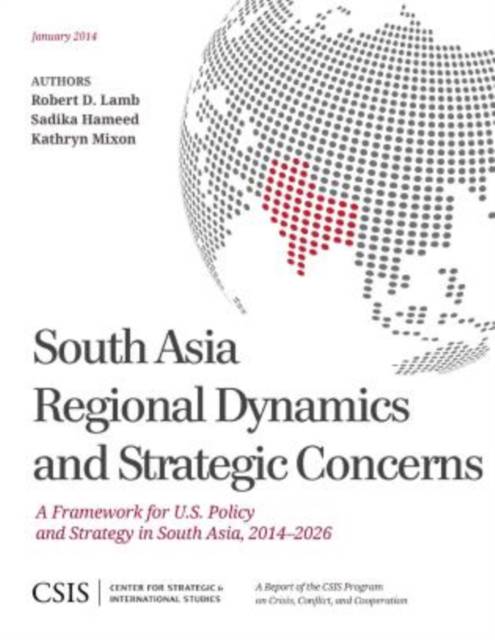
South Asia Regional Dynamics and Strategic Concerns
A Framework for U.S. Policy and Strategy in South Asia, 2014-2026
Robert A Lamb, Sadika Hameed, Kathryn Mixon
€ 89,95
+ 179 punten
Omschrijving
Once the United States withdraws most or all of its forces from Afghanistan, what issues are likely to continue to be of concern to U.S. policymakers in South Asia? What regional dynamics are likely to affect their ability to achieve policy priorities there? While the United States and its coalition partners have focused primarily on Afghanistan and Pakistan over the past 12 years, the strategic dynamics most likely to be relevant over the next 12 years will probably be clustered around relationships linking Pakistan, India, and China. The authors of this report propose a framework for U.S. policy in South Asia centered around that cluster rather than the more common cluster of Afghanistan, Pakistan, and India. The report includes an analysis of U.S. policy priorities, contingencies, and regional dynamics in South Asia.
Specificaties
Betrokkenen
- Auteur(s):
- Uitgeverij:
Inhoud
- Aantal bladzijden:
- 38
- Taal:
- Engels
- Reeks:
Eigenschappen
- Productcode (EAN):
- 9781442228191
- Verschijningsdatum:
- 3/02/2014
- Uitvoering:
- Paperback
- Formaat:
- Trade paperback (VS)
- Afmetingen:
- 214 mm x 281 mm
- Gewicht:
- 263 g


Alleen bij Standaard Boekhandel
+ 179 punten op je klantenkaart van Standaard Boekhandel
AANGERADEN


Beoordelingen
We publiceren alleen reviews die voldoen aan de voorwaarden voor reviews. Bekijk onze voorwaarden voor reviews.