


- Afhalen na 1 uur in een winkel met voorraad
- Gratis thuislevering in België vanaf € 30
- Ruim aanbod met 7 miljoen producten
- Afhalen na 1 uur in een winkel met voorraad
- Gratis thuislevering in België vanaf € 30
- Ruim aanbod met 7 miljoen producten





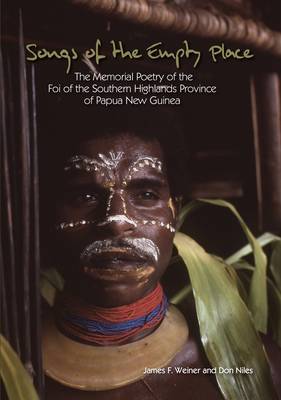
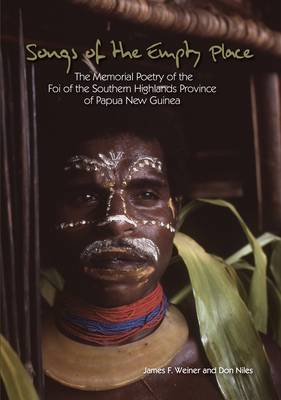
Songs of the Empty Place
The Memorial Poetry of the Foi of the Southern Highlands Province of Papua New Guinea
James Weiner, Don Niles
€ 46,45
+ 92 punten
Omschrijving
For 31 months between 1979 and 1995, James F. Weiner conducted anthropological research amongst the Foi people in Southern Highlands Province, Papua New Guinea. This book contains the transcriptions, translations, and descriptions of the songs he recorded. The texts of women's sago songs (obedobora), men's ceremonial songs (sorohabora), and women's sorohabora are included. Men turn the prosaic content of womenís sago songs into their own sorohabora songs, which are performed the night following large-scale inter-community pig kills, called dawa. While women sing sago songs by themselves, men sing their ceremonial songs in groups of paired men. Women also have their own ceremonial versions of such songs. The songs are memorial in intent; they are designed to commemorate the lives of men who are no longer living. Most commonly they do so by naming the places the deceased inhabited during his lifetime. These song texts and translations are introduced by Weiner. Ethnomusicologist Don Niles then brings together information about each type of song and considers these Foi genres in relation to those of neighbouring groups, highlighting aspects of regional performance styles. Consideration is also given to the poetic devices used in Papua New Guinea songs. Eighteen recordings illustrating the Foi genres discussed in this book are available for download. It remains uncertain how such songs may be affected by the major oil extraction project that has been undertaken in the region for more than two decades. This book will interest students of anthropology, ethnomusicology, linguistics, verbal art, aesthetics, and cultural heritage.
Specificaties
Betrokkenen
- Auteur(s):
- Uitgeverij:
Inhoud
- Aantal bladzijden:
- 238
- Taal:
- Engels
- Reeks:
Eigenschappen
- Productcode (EAN):
- 9781925022223
- Verschijningsdatum:
- 1/07/2015
- Uitvoering:
- Paperback
- Formaat:
- Trade paperback (VS)
- Afmetingen:
- 176 mm x 250 mm
- Gewicht:
- 548 g


Alleen bij Standaard Boekhandel
+ 92 punten op je klantenkaart van Standaard Boekhandel
Cadeau

AANGERADEN


Beoordelingen
We publiceren alleen reviews die voldoen aan de voorwaarden voor reviews. Bekijk onze voorwaarden voor reviews.