


- Afhalen na 1 uur in een winkel met voorraad
- Gratis thuislevering in België vanaf € 30
- Ruim aanbod met 7 miljoen producten
- Afhalen na 1 uur in een winkel met voorraad
- Gratis thuislevering in België vanaf € 30
- Ruim aanbod met 7 miljoen producten





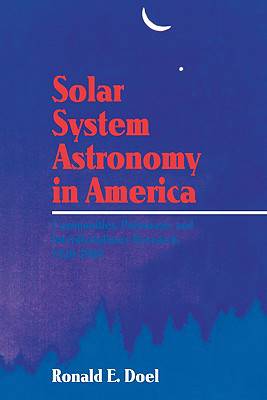
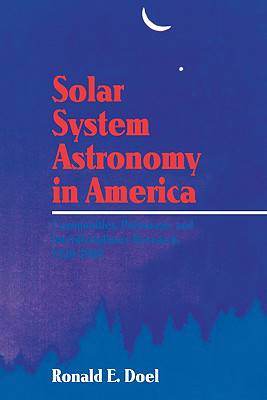
Solar System Astronomy in America
Communities, Patronage, and Interdisciplinary Science, 1920-1960
Ronald E Doel
Paperback | Engels
€ 67,95
+ 135 punten
Uitvoering
Omschrijving
Between 1920 and 1960 astronomers began working with scientists in other fields in order to better understand the nature of the solar system. Researchers made wide-ranging attempts to solve such problems as the nature of lunar and terrestrial craters, the origin of comets and meteors, and the birth of the solar system. While often tinged with controversy, this work provided the foundation for planetary science in the space age. Exploiting previously unused archival material, Ronald Doel investigates this emerging interdisciplinary scientific community and its influence on astronomy, meteorology, geology, and geophysics. He examines how studies in planetary science were influenced by shifts in institutional mandates, new research techniques, and Cold War government-military funding. Above all, the book explores an important branch of what is now called the environmental sciences. This book will interest historians of science as well as astronomers.
Specificaties
Betrokkenen
- Auteur(s):
- Uitgeverij:
Inhoud
- Aantal bladzijden:
- 316
- Taal:
- Engels
Eigenschappen
- Productcode (EAN):
- 9780521115681
- Verschijningsdatum:
- 16/07/2009
- Uitvoering:
- Paperback
- Formaat:
- Trade paperback (VS)
- Afmetingen:
- 152 mm x 229 mm
- Gewicht:
- 462 g


Alleen bij Standaard Boekhandel
+ 135 punten op je klantenkaart van Standaard Boekhandel
Cadeau

AANGERADEN


Beoordelingen
We publiceren alleen reviews die voldoen aan de voorwaarden voor reviews. Bekijk onze voorwaarden voor reviews.