


- Afhalen na 1 uur in een winkel met voorraad
- Gratis thuislevering in België vanaf € 30
- Ruim aanbod met 7 miljoen producten
- Afhalen na 1 uur in een winkel met voorraad
- Gratis thuislevering in België vanaf € 30
- Ruim aanbod met 7 miljoen producten





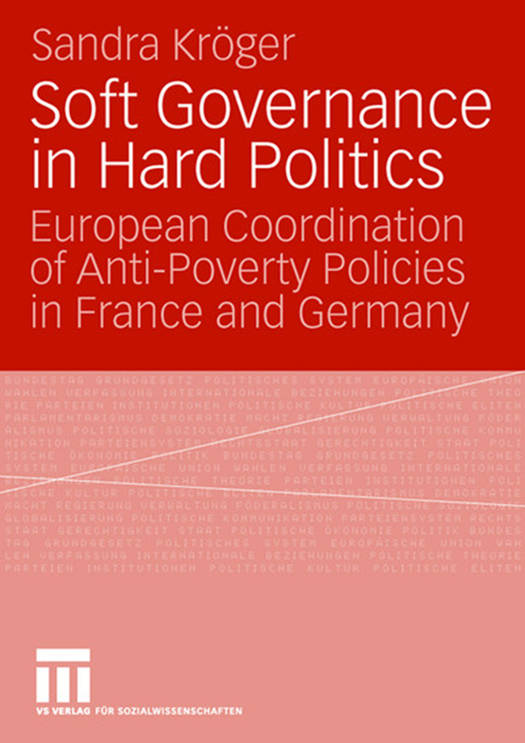
Soft Governance in Hard Politics
European Coordination of Anti-Poverty Policies in France and Germany
Sandra Kröger
Paperback | Engels
€ 53,45
+ 106 punten
Omschrijving
The present study addresses the governance architecture of the much debated Open Method of Coordination (OMC) in the field of social inclusion and evaluates its implementation in France, Germany and at EU-level. Based on extensive variable-based empirical research, it assesses both the effectiveness and the legitimacy of the OMC and comes to unequivocal conclusions: Due to the resistance of member states and remaining differences in underlying ideas of social justice, anti-poverty policy could not be Europeanised through the OMC which unfolds as a very weak governance architecture. The general framework of negative integration remains unchallenged by this non-binding instrument which, to the contrary of its intention, rather forecloses the possibility of supranational learning. With regard to legitimacy, the OMC supports policy-making in closed, intransparent circles of very weakly or not democratically mandated representatives and therefore does little do decrease the democratic deficit of the EU - however one of its original ambitions.
Specificaties
Betrokkenen
- Auteur(s):
- Uitgeverij:
Inhoud
- Aantal bladzijden:
- 246
- Taal:
- Engels
Eigenschappen
- Productcode (EAN):
- 9783531163673
- Verschijningsdatum:
- 9/10/2008
- Uitvoering:
- Paperback
- Formaat:
- Trade paperback (VS)
- Afmetingen:
- 148 mm x 210 mm
- Gewicht:
- 312 g


Alleen bij Standaard Boekhandel
+ 106 punten op je klantenkaart van Standaard Boekhandel
Cadeau

AANGERADEN


Beoordelingen
We publiceren alleen reviews die voldoen aan de voorwaarden voor reviews. Bekijk onze voorwaarden voor reviews.