


- Afhalen na 1 uur in een winkel met voorraad
- Gratis thuislevering in België vanaf € 30
- Ruim aanbod met 7 miljoen producten
- Afhalen na 1 uur in een winkel met voorraad
- Gratis thuislevering in België vanaf € 30
- Ruim aanbod met 7 miljoen producten





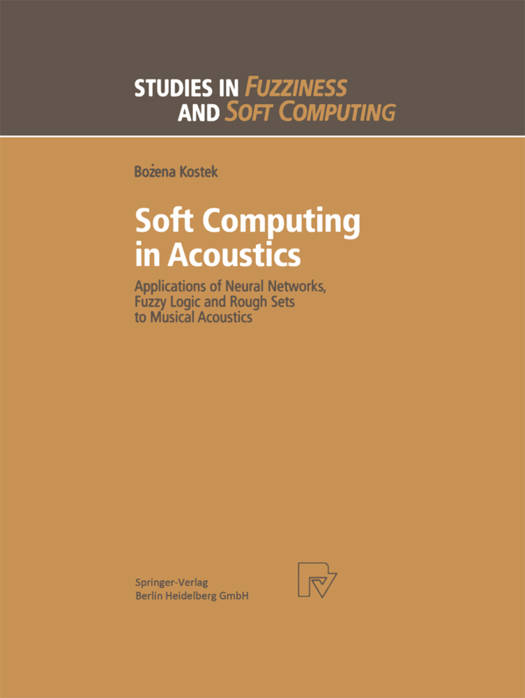
Soft Computing in Acoustics
Applications of Neural Networks, Fuzzy Logic and Rough Sets to Musical Acoustics
Bozena Kostek
€ 106,95
+ 213 punten
Uitvoering
Omschrijving
Applications of some selected soft computing methods to acoustics and sound engineering are presented in this book. The aim of this research study is the implementation of soft computing methods to musical signal analysis and to the recognition of musical sounds and phrases. Accordingly, some methods based on such learning algorithms as neural networks, rough sets and fuzzy-logic were conceived, implemented and tested. Additionally, the above-mentioned methods were applied to the analysis and verification of subjective testing results. The last problem discussed within the framework of this book was the problem of fuzzy control of the classical pipe organ instrument.
The obtained results show that computational intelligence and soft computing may be used for solving some vital problems in both musical and architectural acoustics.
The obtained results show that computational intelligence and soft computing may be used for solving some vital problems in both musical and architectural acoustics.
Specificaties
Betrokkenen
- Auteur(s):
- Uitgeverij:
Inhoud
- Aantal bladzijden:
- 244
- Taal:
- Engels
- Reeks:
- Reeksnummer:
- nr. 31
Eigenschappen
- Productcode (EAN):
- 9783662130056
- Verschijningsdatum:
- 18/04/2014
- Uitvoering:
- Paperback
- Formaat:
- Trade paperback (VS)
- Afmetingen:
- 210 mm x 279 mm
- Gewicht:
- 598 g


Alleen bij Standaard Boekhandel
+ 213 punten op je klantenkaart van Standaard Boekhandel
AANGERADEN


Beoordelingen
We publiceren alleen reviews die voldoen aan de voorwaarden voor reviews. Bekijk onze voorwaarden voor reviews.