


- Afhalen na 1 uur in een winkel met voorraad
- Gratis thuislevering in België vanaf € 30
- Ruim aanbod met 7 miljoen producten
- Afhalen na 1 uur in een winkel met voorraad
- Gratis thuislevering in België vanaf € 30
- Ruim aanbod met 7 miljoen producten




Omschrijving
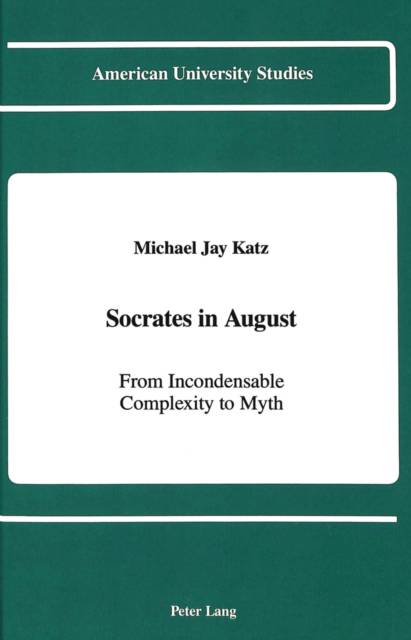
How is our world incondensably complex? What does this mean for the kinds of understandings with which we must eventually rest satisfied? In 399 B.C., Socrates would have faced this challenge without the language of modern science - a language rife with spacetime continua and four dimensions and genetic codes, all of which hide innumerable elemental assumptions about the structure of human understanding. Instead, Socrates had only his hands and his feet, and trees, houses, and mountains. Most of all, Socrates had the great myths, tales that, having rubbed shoulders with people since time immemorial, still maintain a standing in the crowd. Myths are bald wishes and hopes that are unabashedly fiction and that are human because they resonate in the human soul. They reiterate common human qualities, and they mirror truths that are direct and general and special to us all.
Specificaties
Betrokkenen
- Auteur(s):
- Uitgeverij:
Inhoud
- Aantal bladzijden:
- 193
- Taal:
- Engels
- Reeks:
- Reeksnummer:
- nr. 66
Eigenschappen
- Productcode (EAN):
- 9780820407814
- Verschijningsdatum:
- 1/09/1991
- Uitvoering:
- Hardcover
- Formaat:
- Genaaid
- Afmetingen:
- 236 mm x 162 mm
- Gewicht:
- 439 g


Alleen bij Standaard Boekhandel
Cadeau

AANGERADEN


Beoordelingen
We publiceren alleen reviews die voldoen aan de voorwaarden voor reviews. Bekijk onze voorwaarden voor reviews.