


- Afhalen na 1 uur in een winkel met voorraad
- Gratis thuislevering in België vanaf € 30
- Ruim aanbod met 7 miljoen producten
- Afhalen na 1 uur in een winkel met voorraad
- Gratis thuislevering in België vanaf € 30
- Ruim aanbod met 7 miljoen producten





€ 58,45
+ 116 punten
Omschrijving
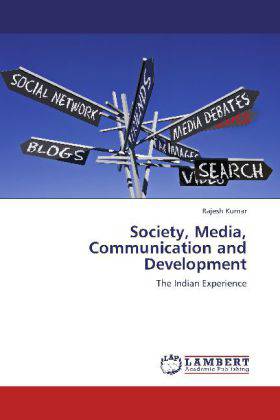
Over the last few decades, different forms of linkages which connect media to their source, i.e., society and other institutions have been brought to light: what do the media actually do for society and their clients and audiences ? What makes people change their behaviour, attitude and ways of life? We usually speak of knowledge as the outcome of a communication or learning process. But the direct product of the media is not knowledge itself but massages with a potential for knowledge-forming . This book is an attempt to respond to all these enquiries. An attempt has been made to analyse and elaborate upon the relationship between society, media, communication and development looking from developing nations communication needs and resources in general and Indian perspective in particular. This work provides a valuable insight into social/development communication theory and practice with a distinct focus on India which may be of immense use to students and researchers in the relevant fields.
Specificaties
Betrokkenen
- Auteur(s):
- Uitgeverij:
Inhoud
- Aantal bladzijden:
- 124
- Taal:
- Engels
Eigenschappen
- Productcode (EAN):
- 9783848409372
- Verschijningsdatum:
- 23/02/2012
- Uitvoering:
- Paperback
- Afmetingen:
- 152 mm x 220 mm
- Gewicht:
- 191 g


Alleen bij Standaard Boekhandel
+ 116 punten op je klantenkaart van Standaard Boekhandel
Cadeau

AANGERADEN


Beoordelingen
We publiceren alleen reviews die voldoen aan de voorwaarden voor reviews. Bekijk onze voorwaarden voor reviews.