



Je cadeautjes zeker op tijd in huis hebben voor de feestdagen? Kom langs in onze winkels en vind het perfecte geschenk!
- Afhalen na 1 uur in een winkel met voorraad
- Gratis thuislevering in België vanaf € 30
- Ruim aanbod met 7 miljoen producten
Je cadeautjes zeker op tijd in huis hebben voor de feestdagen? Kom langs in onze winkels en vind het perfecte geschenk!
- Afhalen na 1 uur in een winkel met voorraad
- Gratis thuislevering in België vanaf € 30
- Ruim aanbod met 7 miljoen producten





Omschrijving
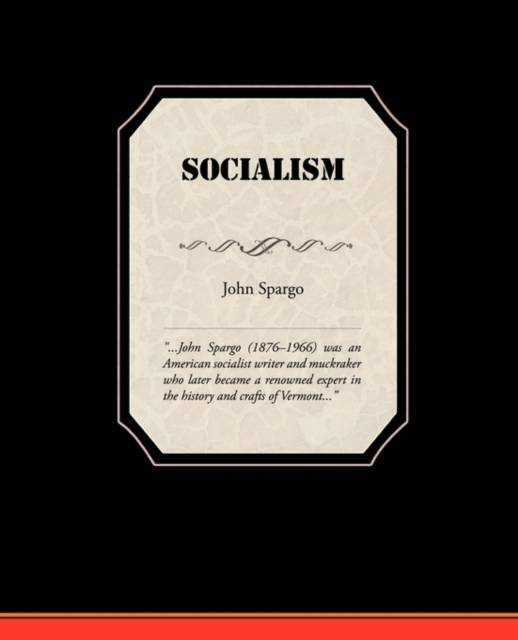
John Spargo (1876-1966) was an American socialist writer and muckraker who later became a renowned expert in the history and crafts of Vermont. In 1901 the British born Spargo received an invitation from the private lecture bureau to travel to America to spend a couple months traveling the country, speaking about socialism. The lecture tour was not what he had expected and Spargo shoveled snow and ate in bread lines until he could establish himself. Spargo was elected to the National Committee of the Socialist Party in 1905. Socialism: A Summary and Interpretation of Socialist Principles was first published in 1906. Topics include Robert Owen and the utopian spirit, The "Communist Manifesto" and the scientific spirit, The materialistic conception of history, Capitalism and the law of concentration, The class struggle theory, Karl Marx and the economics of socialism, Outlines of socialist economic theory, Outlines of the socialist state, and The means of realization.
Specificaties
Betrokkenen
- Auteur(s):
- Uitgeverij:
Inhoud
- Aantal bladzijden:
- 214
- Taal:
- Engels
Eigenschappen
- Productcode (EAN):
- 9781438532103
- Verschijningsdatum:
- 4/12/2009
- Uitvoering:
- Paperback
- Formaat:
- Trade paperback (VS)
- Afmetingen:
- 190 mm x 235 mm
- Gewicht:
- 376 g


Alleen bij Standaard Boekhandel
+ 62 punten op je klantenkaart van Standaard Boekhandel
CADEAU


Beoordelingen
We publiceren alleen reviews die voldoen aan de voorwaarden voor reviews. Bekijk onze voorwaarden voor reviews.