



Je cadeautjes zeker op tijd in huis hebben voor de feestdagen? Kom langs in onze winkels en vind het perfecte geschenk!
- Afhalen na 1 uur in een winkel met voorraad
- Gratis thuislevering in België vanaf € 30
- Ruim aanbod met 7 miljoen producten
Je cadeautjes zeker op tijd in huis hebben voor de feestdagen? Kom langs in onze winkels en vind het perfecte geschenk!
- Afhalen na 1 uur in een winkel met voorraad
- Gratis thuislevering in België vanaf € 30
- Ruim aanbod met 7 miljoen producten





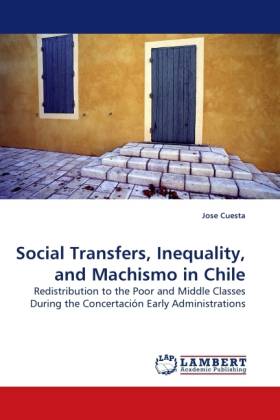
Social Transfers, Inequality, and Machismo in Chile
Redistribution to the Poor and Middle Classes During the Concertación Early Administrations
Jose Cuesta
Paperback | Engels
€ 77,95
+ 155 punten
Omschrijving
The virtuous circle of rapid growth and targeted social policies during the Nineties made Chile an icon of modern development. Previous studies portrait such policies as highly progressive. This book challenges that view arguing that the Concertacion early administrations sought an inclusive strategy benefiting middle as well as poor classes. That would explain the remarkable reduction in poverty without inequality declines, a phenomenon still prevalent in Chile. A new redistributive picture emerges when the valuation of social services considers effective rather than statutory costs. This book also analyses the redistributive impact of the newly estimated social transfers, using sample selection correcting techniques. Two of these effects are explored: one, on the decision to work; the other, on the bargaining power of individuals within the household. Results show that impacts of social transfers in the incidence of poverty and intrahousehold bargaining were rather small. Interestingly, patterns of discrimination within the household are shown to reverse much of the positive effects of social transfers in the incidence of poverty.
Specificaties
Betrokkenen
- Auteur(s):
- Uitgeverij:
Inhoud
- Aantal bladzijden:
- 368
- Taal:
- Engels
Eigenschappen
- Productcode (EAN):
- 9783838326931
- Uitvoering:
- Paperback
- Gewicht:
- 500 g


Alleen bij Standaard Boekhandel
+ 155 punten op je klantenkaart van Standaard Boekhandel
CADEAU


Beoordelingen
We publiceren alleen reviews die voldoen aan de voorwaarden voor reviews. Bekijk onze voorwaarden voor reviews.