


- Afhalen na 1 uur in een winkel met voorraad
- Gratis thuislevering in België vanaf € 30
- Ruim aanbod met 7 miljoen producten
- Afhalen na 1 uur in een winkel met voorraad
- Gratis thuislevering in België vanaf € 30
- Ruim aanbod met 7 miljoen producten





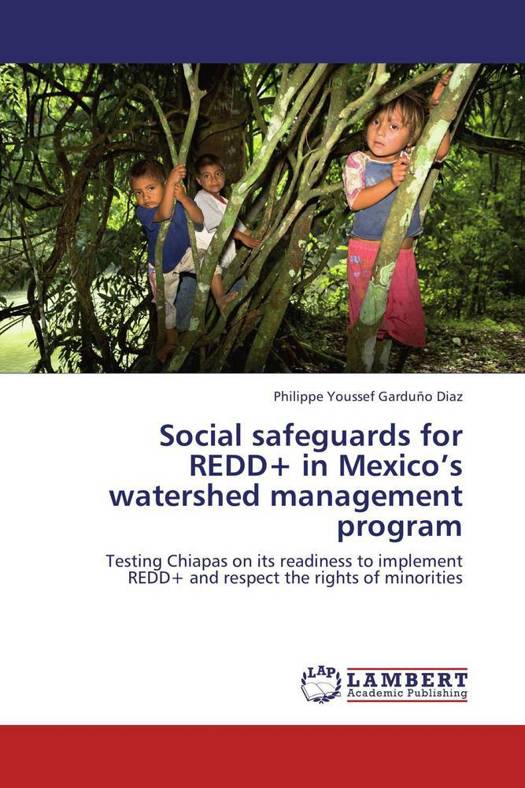
Social Safeguards for Redd+ in Mexico's Watershed Management Program
Testing Chiapas on its readiness to implement REDD+ and respect the rights of minorities
Garduno Diaz Philippe Youssef
Paperback | Engels
€ 33,00
+ 66 punten
Omschrijving
This study focuses on seven social safeguards relevant to REDD+. The existence of these social safeguards is examined in Mexico's watershed management program in La Sierra Madre and La Costa of Chiapas. The watershed management program is another Payment for Ecosystem Services (PES) scheme similar to REDD+. Questionnaires and interviews were used to conduct primary research with participants of the watershed management program. Upon the examination of the collected data the safeguards were analyzed on their sufficiency for REDD+. It could be observed that some social safeguards are in place, however, none of them sufficiently for REDD+. In regards to implementation of REDD+ the most challenging social safeguard will be the concept of "free, prior and informed consent." This holds true as long as REDD+ will be implemented nationally. If that will be the case the government would have to convince locals across the country to participate in REDD+, including those that already announced their opposition in the Declaration of Patihuitz. Without legitimization there will be little participation and commitment on the side of local people, which is crucial to make REDD+ work.
Specificaties
Betrokkenen
- Auteur(s):
- Uitgeverij:
Inhoud
- Aantal bladzijden:
- 56
- Taal:
- Engels
Eigenschappen
- Productcode (EAN):
- 9783659441974
- Verschijningsdatum:
- 17/08/2013
- Uitvoering:
- Paperback
- Formaat:
- Trade paperback (VS)
- Afmetingen:
- 152 mm x 229 mm
- Gewicht:
- 95 g


Alleen bij Standaard Boekhandel
+ 66 punten op je klantenkaart van Standaard Boekhandel

Beoordelingen
We publiceren alleen reviews die voldoen aan de voorwaarden voor reviews. Bekijk onze voorwaarden voor reviews.