


- Afhalen na 1 uur in een winkel met voorraad
- Gratis thuislevering in België vanaf € 30
- Ruim aanbod met 7 miljoen producten
- Afhalen na 1 uur in een winkel met voorraad
- Gratis thuislevering in België vanaf € 30
- Ruim aanbod met 7 miljoen producten





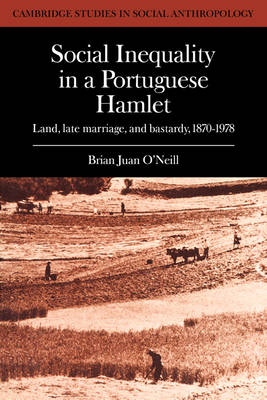
Social Inequality in a Portuguese Hamlet
Land, Late Marriage, and Bastardy, 1870 1978
Brian O'Neill, O'Neill Brian Juan
€ 103,95
+ 207 punten
Omschrijving
The traditional image of northern Iberian mountain settlements is that they are largely egalitarian, homogeneous, and survivals of archaic forms of 'agrarian collectivism'. In this book, based both on extensive fieldwork and detailed study of local records, Brian Juan O'Neill offers a different perspective, questioning prevailing views on both empirical as well as theoretical and methodological grounds. Through a detailed examination of three major areas of social life - land tenure, cooperative labour exchanges, and marriage and inheritance practices - in one particular hamlet, the author demonstrates the predominance of forms of institutionalized economic inequality and social differentiation within the peasantry. Situating the local study within a wider European and Mediterranean ethnographic and geographical framework, O'Neill offers a refreshing and challenging way of combining the research methods of anthropology with those of social and economic history. His book will appeal to anthropologists, historians, sociologists, geographers and demographers interested in the present and past social structure of European village communities, as well as to those concerned with the growing links between anthropology and history.
Specificaties
Betrokkenen
- Auteur(s):
- Uitgeverij:
Inhoud
- Aantal bladzijden:
- 452
- Taal:
- Engels
- Reeks:
- Reeksnummer:
- nr. 63
Eigenschappen
- Productcode (EAN):
- 9780521040426
- Verschijningsdatum:
- 5/11/2007
- Uitvoering:
- Paperback
- Formaat:
- Trade paperback (VS)
- Afmetingen:
- 152 mm x 229 mm
- Gewicht:
- 657 g


Alleen bij Standaard Boekhandel
+ 207 punten op je klantenkaart van Standaard Boekhandel
AANGERADEN


Beoordelingen
We publiceren alleen reviews die voldoen aan de voorwaarden voor reviews. Bekijk onze voorwaarden voor reviews.