


- Afhalen na 1 uur in een winkel met voorraad
- Gratis thuislevering in België vanaf € 30
- Ruim aanbod met 7 miljoen producten
- Afhalen na 1 uur in een winkel met voorraad
- Gratis thuislevering in België vanaf € 30
- Ruim aanbod met 7 miljoen producten





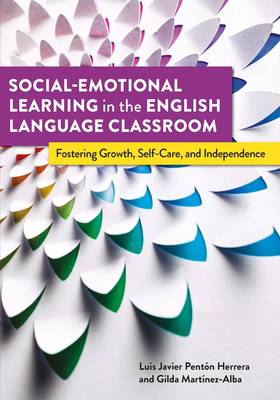
Social-Emotional Learning in the English Language Classroom
Fostering Growth, Self-Care, and Independence
Luis Javier Pentón Herrera, Gilda Martinez-Alba
Paperback | Engels
€ 57,95
+ 115 punten
Omschrijving
The incorporation of social and emotional learning (SEL) practices has been growing in the United States and around the world for some years.
Many public and private educational systems, community organizations, and higher education institutions embrace SEL practices in various forms, such as wellness conversations, mindfulness interventions, trauma-informed practices, restorative circles, yoga, among many other interventions. Recent global events that our children, youth, and adults are experiencing, such as global pandemics, natural disasters, religious persecutions, forced migrations, social and political unrest, and violence, are reminding us of our interconnectedness as global citizens. At the same time, society and employers are now, more than ever, in desperate need of individuals who are emotionally intelligent (Harvard Business Review, 2015).
While SEL is becoming increasing critical for learners' success, teachers often feel unprepared to incorporate or address it in their classrooms. This book serves as a practical, concise, and easy-to-follow reference that English language teachers in K-12 and adult education and English language teacher educators can use in their classrooms. It is one of the limited emerging SEL resources available that is tailored to the English language teaching field and contributes to filling the existing gap of SEL in English language education. Teachers will be equipped with the necessary knowledge and skills to practice self-care and be confident in implementing SEL in their learning spaces to support and benefit their learners.
Specificaties
Betrokkenen
- Auteur(s):
- Uitgeverij:
Inhoud
- Aantal bladzijden:
- 126
- Taal:
- Engels
Eigenschappen
- Productcode (EAN):
- 9781953745026
- Verschijningsdatum:
- 22/08/2021
- Uitvoering:
- Paperback
- Formaat:
- Trade paperback (VS)
- Afmetingen:
- 175 mm x 251 mm
- Gewicht:
- 226 g


Alleen bij Standaard Boekhandel
+ 115 punten op je klantenkaart van Standaard Boekhandel
Cadeau

AANGERADEN


Beoordelingen
We publiceren alleen reviews die voldoen aan de voorwaarden voor reviews. Bekijk onze voorwaarden voor reviews.