


- Afhalen na 1 uur in een winkel met voorraad
- Gratis thuislevering in België vanaf € 30
- Ruim aanbod met 7 miljoen producten
- Afhalen na 1 uur in een winkel met voorraad
- Gratis thuislevering in België vanaf € 30
- Ruim aanbod met 7 miljoen producten





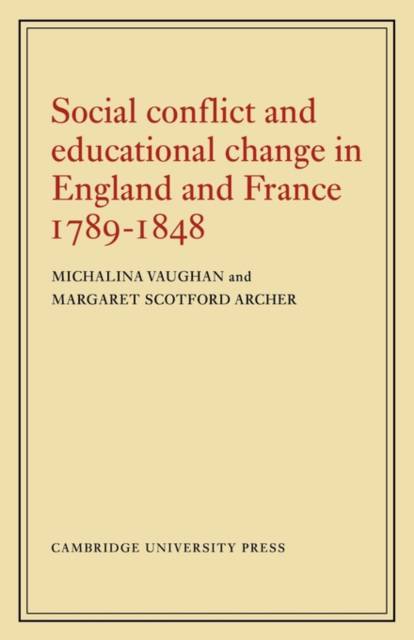
Social Conflict and Educational Change in England and France 1789 1848
Michalina Vaughan, Margaret Scotford Archer
Paperback | Engels
€ 73,95
+ 147 punten
Eenvoudig bestellen
Veilig betalen


Gratis thuislevering vanaf € 30 (via bpost)
Gratis levering in je Standaard Boekhandel
Omschrijving
This book analyses the processes of educational change in England and France by relating political, social, economic and ideological trends to the changing pattern of educational institutions from the time of the Industrial and French revolutions. The authors first assess the relevance of major sociological theories for the interpretation of the main trends in education in both countries in the first half of the nineteenth century. They then put forward an alternative approach, derived from Weber, which links educational change with social conflict. This theory of domination and assertion of groups competing for control over formal instruction before the emergence of the state system is applied to England and France in this period. The main part of the book is devoted to a more detailed analysis of the competing groups in both countries and of their ideologies which served as blueprints for educational reform.
Specificaties
Betrokkenen
- Auteur(s):
- Uitgeverij:
Inhoud
- Aantal bladzijden:
- 270
- Taal:
- Engels
Eigenschappen
- Productcode (EAN):
- 9780521144551
- Verschijningsdatum:
- 24/06/2010
- Uitvoering:
- Paperback
- Formaat:
- Trade paperback (VS)
- Afmetingen:
- 140 mm x 216 mm
- Gewicht:
- 344 g


Alleen bij Standaard Boekhandel
+ 147 punten op je klantenkaart van Standaard Boekhandel
CADEAU

AANGERADEN


Beoordelingen
We publiceren alleen reviews die voldoen aan de voorwaarden voor reviews. Bekijk onze voorwaarden voor reviews.