


- Afhalen na 1 uur in een winkel met voorraad
- Gratis thuislevering in België vanaf € 30
- Ruim aanbod met 7 miljoen producten
- Afhalen na 1 uur in een winkel met voorraad
- Gratis thuislevering in België vanaf € 30
- Ruim aanbod met 7 miljoen producten





Omschrijving
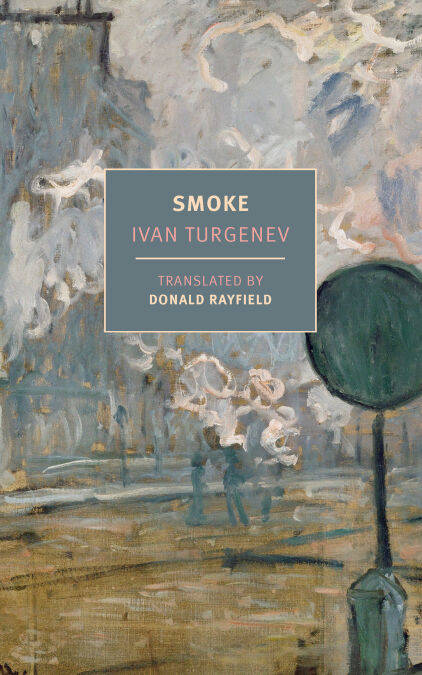
A young Russian man, engaged to be married, encounters his former love in a German spa town and is soon enmeshed in a torturous romantic tangle in this graceful, politically tinged love story by a Russian literary great.
Ivan Turgenev's fifth novel, Smoke, caused a furor when it was published in 1867. Tolstoy claimed that his fellow writer loved only fornication, not his country; the poet Tiutchev that he was polluting "the smoke of the fatherland, sweet and pleasant." The novel's vulnerable hero, Grigori Litvinov, is an intelligent but unremarkable man who is on his way home from agronomical studies in Germany, intending to marry his fiancée Tatiana and run his father's neglected estate. He stops in Baden-Baden to meet Tatiana and runs into his former love, the ruthless and now aristocratic Irina, who is there with her husband. A dormant erotic passion overwhelms Litvinov; he jilts Tatiana and prepares to elope with Irina. Meanwhile, the Russians abroad, whether revolutionaries or reactionaries, from whom Litvinov keeps his distance, emerge as hypocritical bigots. The single man Litvinov admires, Potugin, denounces both right-wing aristocrats and left-wing radicals—indeed all of Russia—as irredeemably backward.
Ivan Turgenev's fifth novel, Smoke, caused a furor when it was published in 1867. Tolstoy claimed that his fellow writer loved only fornication, not his country; the poet Tiutchev that he was polluting "the smoke of the fatherland, sweet and pleasant." The novel's vulnerable hero, Grigori Litvinov, is an intelligent but unremarkable man who is on his way home from agronomical studies in Germany, intending to marry his fiancée Tatiana and run his father's neglected estate. He stops in Baden-Baden to meet Tatiana and runs into his former love, the ruthless and now aristocratic Irina, who is there with her husband. A dormant erotic passion overwhelms Litvinov; he jilts Tatiana and prepares to elope with Irina. Meanwhile, the Russians abroad, whether revolutionaries or reactionaries, from whom Litvinov keeps his distance, emerge as hypocritical bigots. The single man Litvinov admires, Potugin, denounces both right-wing aristocrats and left-wing radicals—indeed all of Russia—as irredeemably backward.
Specificaties
Betrokkenen
- Auteur(s):
- Vertaler(s):
- Uitgeverij:
Inhoud
- Aantal bladzijden:
- 272
- Taal:
- Engels
Eigenschappen
- Productcode (EAN):
- 9798896230458
- Verschijningsdatum:
- 13/07/2026
- Uitvoering:
- E-book
- Beveiligd met:
- Adobe DRM
- Formaat:
- ePub



Alleen bij Standaard Boekhandel
+ 17 punten op je klantenkaart van Standaard Boekhandel
Cadeau

AANGERADEN


Beoordelingen
We publiceren alleen reviews die voldoen aan de voorwaarden voor reviews. Bekijk onze voorwaarden voor reviews.