


- Afhalen na 1 uur in een winkel met voorraad
- Gratis thuislevering in België vanaf € 30
- Ruim aanbod met 7 miljoen producten
- Afhalen na 1 uur in een winkel met voorraad
- Gratis thuislevering in België vanaf € 30
- Ruim aanbod met 7 miljoen producten





€ 195,45
+ 390 punten
Omschrijving
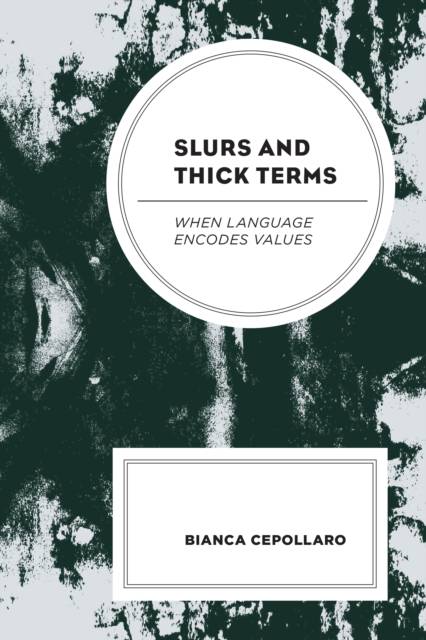
What is the relation between language, communication, and values? In Slurs and Thick Terms: When Language Encodes Values, Bianca Cepollaro explores the ways in which certain pieces of evaluative language not only reflect speakers' moral perspectives, but also contribute to promoting their evaluative stance. She focuses on slurs--the prototypical example of hate speech, including racial and homophobic epithets--and so-called thick terms, that is, those expressions, much discussed in metaethics, that mix description and evaluation such as "lewd," "chaste," "generous," or "selfish." This book argues that in employing such terms, speakers not only say something purely factual about people and things, but also presuppose certain values, as if they were common ground among the conversation participants. Cepollaro illustrates how this linguistic mechanism effectively explains the pervasive social and moral effects of evaluative language. Using a multidisciplinary approach, she tackles issues in philosophy of language, linguistics, ethics, and metaethics. Moreover, the theoretical investigation takes into consideration and discusses empirical data from psychology and experimental philosophy.
Specificaties
Betrokkenen
- Auteur(s):
- Uitgeverij:
Inhoud
- Aantal bladzijden:
- 184
- Taal:
- Engels
- Reeks:
Eigenschappen
- Productcode (EAN):
- 9781793610522
- Verschijningsdatum:
- 31/08/2020
- Uitvoering:
- Hardcover
- Formaat:
- Genaaid
- Afmetingen:
- 152 mm x 229 mm
- Gewicht:
- 439 g


Alleen bij Standaard Boekhandel
+ 390 punten op je klantenkaart van Standaard Boekhandel
Cadeau

AANGERADEN


Beoordelingen
We publiceren alleen reviews die voldoen aan de voorwaarden voor reviews. Bekijk onze voorwaarden voor reviews.