


- Afhalen na 1 uur in een winkel met voorraad
- Gratis thuislevering in België vanaf € 30
- Ruim aanbod met 7 miljoen producten
- Afhalen na 1 uur in een winkel met voorraad
- Gratis thuislevering in België vanaf € 30
- Ruim aanbod met 7 miljoen producten





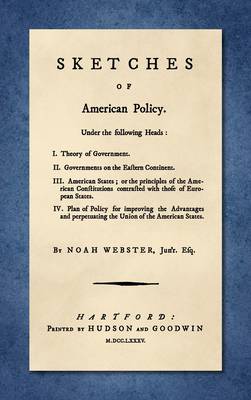
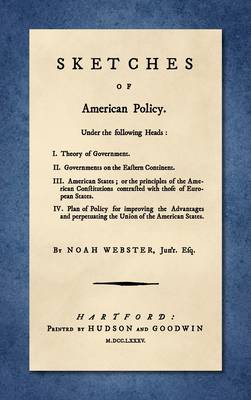
Sketches of American Policy. [1785]
Under the Following Heads: I. Theory of Government. II. Governments on the Eastern Continent. III. American States; Or the Principles of the American Constitutions Contrasted with Those of European States. IV. Plan of Policy for Improving the Advantages an
Noah Webster
Hardcover | Engels
€ 54,45
+ 108 punten
Omschrijving
With a New IntroductionNoah Webster: Proposing and Promoting Stronger National UnionThrough the Power of the English Languageby John R. VileRemembered today as a lexicographer, Webster [1758-1843] was equally active as a political writer. As is the case with his dictionary and grammar textbooks, his political essays are strongly patriotic and embody a confidence that the United States would soon become a great nation. He composed Sketches of American Policy at a time when the nationally minded segments of the political class were beginning to pursue plans to create a strong federal government to replace the Confederation Congress. Seeing this as a necessary step to ensure the nation's progress, Webster endorsed this cause and wrote this pamphlet to promote it. During his tours throughout the states he presented to several people who would become delegates to the Constitutional Convention, including George Washington, James Madison and Benjamin Franklin. It circulated widely among the delegates and was an important influence in their debates. Interesting for this reason, it is also valuable as a contemporary critique of the Articles of Confederation by a gifted scholar who associated with the leading statesmen of the day.xix, 48 pp.
Specificaties
Betrokkenen
- Auteur(s):
- Uitgeverij:
Inhoud
- Aantal bladzijden:
- 72
- Taal:
- Engels
Eigenschappen
- Productcode (EAN):
- 9781584778561
- Verschijningsdatum:
- 11/12/2025
- Uitvoering:
- Hardcover
- Formaat:
- Genaaid
- Afmetingen:
- 152 mm x 229 mm
- Gewicht:
- 267 g


Alleen bij Standaard Boekhandel
+ 108 punten op je klantenkaart van Standaard Boekhandel
Cadeau

AANGERADEN


Beoordelingen
We publiceren alleen reviews die voldoen aan de voorwaarden voor reviews. Bekijk onze voorwaarden voor reviews.