


- Afhalen na 1 uur in een winkel met voorraad
- Gratis thuislevering in België vanaf € 30
- Ruim aanbod met 7 miljoen producten
- Afhalen na 1 uur in een winkel met voorraad
- Gratis thuislevering in België vanaf € 30
- Ruim aanbod met 7 miljoen producten





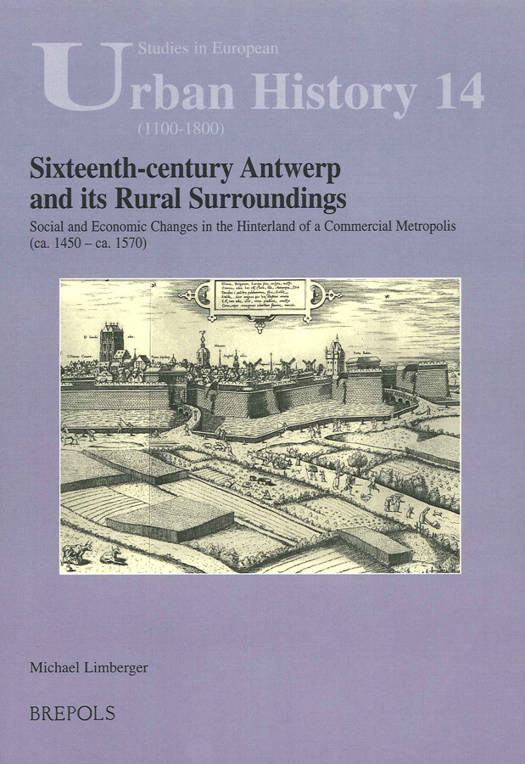
Sixteenth-Century Antwerp and Its Rural Surroundings
Social and Economic Changes in the Hinterland of a Commercial Metropolis (Ca. 1450 - Ca. 1570)
Michael Limberger
€ 68,90
+ 137 punten
Omschrijving
This study of sixteenth-century Antwerp and its surroundings is an attempt to combine commercial explanation models concerning the impact of great towns on their surrounding countryside with an approach in which institutional factors, and especially property relations, play the major role. It focuses on four types of influence of Antwerp on its surroundings: - the demographic impact - the increasing urban demand for agrarian products -the impact of the urban economy on non-agrarian types of labour in the countryside and - the purchases of land and other investments made by Antwerp citizens and their impact on the property relations in the surrounding countryside Within the framework of these four fields of interaction between town and countryside, three essential questions have to be answered: First, how can we characterize the urban influence in each of these fields? Can it be considered a stimulus for the rural economy or rather an obstacle? Second, what was the economic response of the rural economy to the urban impact? Did it respond by specializing, according to the model presented by J. de Vries, and others, or were there obstacles that obstructed specialization? Third, what role did the medieval legacies play in the interaction between the 'capitalist' metropolis and the 'feudal' countryside? Michael Limberger teaches at the Catholic University Brussels (KUB) and at Ghent University. His research covers late medieval and early modern economic and social history, especially of the Low Countries.
Specificaties
Betrokkenen
- Auteur(s):
- Uitgeverij:
Inhoud
- Aantal bladzijden:
- 284
- Taal:
- Engels
- Reeks:
- Reeksnummer:
- nr. 14
Eigenschappen
- Productcode (EAN):
- 9782503527253
- Verschijningsdatum:
- 1/07/2008
- Uitvoering:
- Paperback
- Formaat:
- Trade paperback (VS)
- Afmetingen:
- 178 mm x 246 mm
- Gewicht:
- 635 g


Alleen bij Standaard Boekhandel
+ 137 punten op je klantenkaart van Standaard Boekhandel
Cadeau

AANGERADEN


Beoordelingen
We publiceren alleen reviews die voldoen aan de voorwaarden voor reviews. Bekijk onze voorwaarden voor reviews.