



Je cadeautjes zeker op tijd in huis hebben voor de feestdagen? Kom langs in onze winkels en vind het perfecte geschenk!
- Afhalen na 1 uur in een winkel met voorraad
- Gratis thuislevering in België vanaf € 30
- Ruim aanbod met 7 miljoen producten
Je cadeautjes zeker op tijd in huis hebben voor de feestdagen? Kom langs in onze winkels en vind het perfecte geschenk!
- Afhalen na 1 uur in een winkel met voorraad
- Gratis thuislevering in België vanaf € 30
- Ruim aanbod met 7 miljoen producten





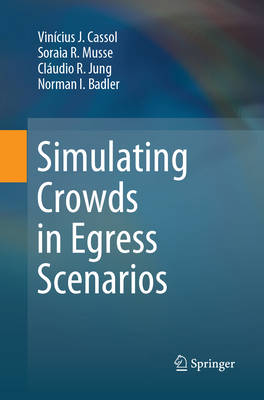
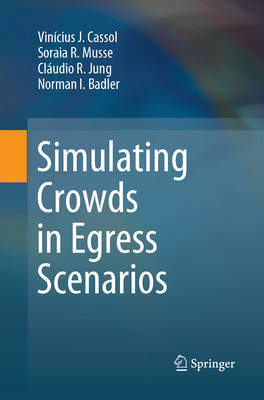
Simulating Crowds in Egress Scenarios
Vinícius J. Cassol, Soraia R. Musse, Cláudio R. Jung, Norman I Badler
Paperback | Engels
€ 72,45
+ 144 punten
Omschrijving
This book describes, from a computer science viewpoint the software, methods of simulating and analysing crowds with a particular focus on the effects of panic in emergency situations.
The power of modern technology impacts on modern life in multiple ways every day. A variety of scientific models and computational tools have been developed to improve human safety and comfort in built environments. In particular, understanding pedestrian behaviours during egress situations is of considerable importance in such contexts. Moreover, some places are built for large numbers of people (such as train stations and airports and high volume special activities such as sporting events).
Simulating Crowds in Egress Scenarios discusses the use of computational crowd simulation to reproduce and evaluate egress performance in specific scenarios. Several case studies are included, evaluating the work and different analyses, and comparisons of simulationdata versus data obtained from real-life experiments are given.
The power of modern technology impacts on modern life in multiple ways every day. A variety of scientific models and computational tools have been developed to improve human safety and comfort in built environments. In particular, understanding pedestrian behaviours during egress situations is of considerable importance in such contexts. Moreover, some places are built for large numbers of people (such as train stations and airports and high volume special activities such as sporting events).
Simulating Crowds in Egress Scenarios discusses the use of computational crowd simulation to reproduce and evaluate egress performance in specific scenarios. Several case studies are included, evaluating the work and different analyses, and comparisons of simulationdata versus data obtained from real-life experiments are given.
Specificaties
Betrokkenen
- Auteur(s):
- Uitgeverij:
Inhoud
- Aantal bladzijden:
- 107
- Taal:
- Engels
Eigenschappen
- Productcode (EAN):
- 9783319879734
- Verschijningsdatum:
- 31/08/2018
- Uitvoering:
- Paperback
- Afmetingen:
- 155 mm x 6 mm
- Gewicht:
- 192 g


Alleen bij Standaard Boekhandel
+ 144 punten op je klantenkaart van Standaard Boekhandel
CADEAU


Beoordelingen
We publiceren alleen reviews die voldoen aan de voorwaarden voor reviews. Bekijk onze voorwaarden voor reviews.