


- Afhalen na 1 uur in een winkel met voorraad
- Gratis thuislevering in België vanaf € 30
- Ruim aanbod met 7 miljoen producten
- Afhalen na 1 uur in een winkel met voorraad
- Gratis thuislevering in België vanaf € 30
- Ruim aanbod met 7 miljoen producten





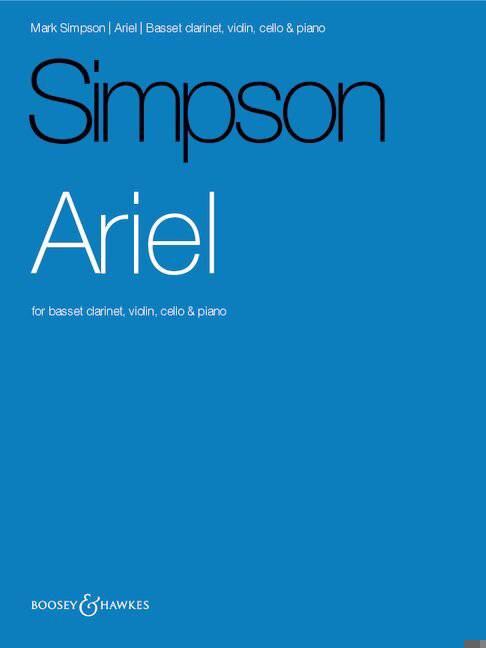
Simpson: Ariel for Basset Clarinet, Violin, Cello, and Piano Score
Paperback | Engels
€ 80,45
+ 160 punten
Omschrijving
(Boosey & Hawkes Chamber Music). Ariel is scored for basset clarinet, violin, cello and piano, and is a response to the poem of the same name by Sylvia Plath. Simpson reacted to the poem musically, jotting down the ideas for instrumental combinations, as well as the emotional content as he read the words. The piece begins, ('Stasis in darkness...') and gradually wakens up to a furious outburst in all the instruments. Scales descend to the depths of the instruments ranges, out of which a slow, winding duet for basset clarinet and cello leads to the centre of the work a slow, calm three-chord chorale. The work then comes to a stand-still where short outbursts are gradually transformed into new, faster material. The three-chord chorale motif then goes through a number of permutations until a recap of the opening's outburst is quickly side-lined by a boldly expressive return of the chorale motif. This piece is about extremes extremes of expression, of instrumental textures and capabilities.
Specificaties
Betrokkenen
- Uitgeverij:
Inhoud
- Aantal bladzijden:
- 68
- Taal:
- Engels
Eigenschappen
- Productcode (EAN):
- 9781784549091
- Verschijningsdatum:
- 1/06/2024
- Uitvoering:
- Paperback
- Formaat:
- Trade paperback (VS)
- Afmetingen:
- 229 mm x 305 mm
- Gewicht:
- 263 g

Alleen bij Standaard Boekhandel
+ 160 punten op je klantenkaart van Standaard Boekhandel
Cadeau

AANGERADEN


Beoordelingen
We publiceren alleen reviews die voldoen aan de voorwaarden voor reviews. Bekijk onze voorwaarden voor reviews.