


- Afhalen na 1 uur in een winkel met voorraad
- Gratis thuislevering in België vanaf € 30
- Ruim aanbod met 7 miljoen producten
- Afhalen na 1 uur in een winkel met voorraad
- Gratis thuislevering in België vanaf € 30
- Ruim aanbod met 7 miljoen producten





€ 89,95
+ 179 punten
Omschrijving
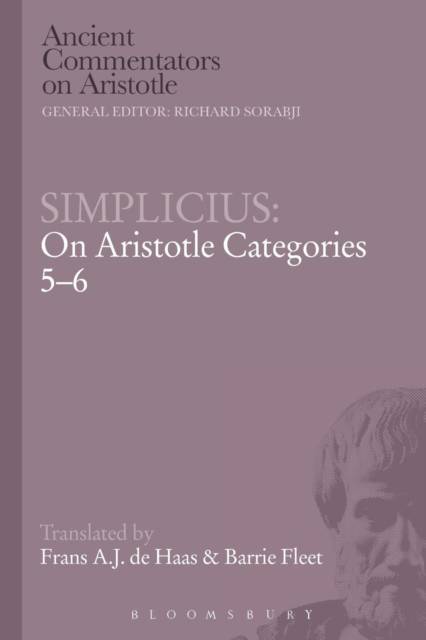
Chapters 5 and 6 of Aristotle's Categories describe his first two categories, Substance and Quantity. It is usually taken that Plotinus attacked Aristotle's Categories, but that Porphyry and Iamblichus restored it to the curriculum once and for all. Nonetheless, the introduction to this text stresses how much of the defence of Aristotle Porphyry was able to draw out of Plotinus' critical discussion. Simplicius' commentary is our most comprehensive account of the debate on the validity of Aristotle's Categories. One subject discussed by Simplicius in these chapters is where the differentia of a species (eg the rationality of humans) fits into the scheme of categories. Another is why Aristotle elevates the category of Quantity to second place, above the category of Quality. Further, de Haas shows how Simplicius distinguishes different kinds of universal order to solve some of the problems.
Specificaties
Betrokkenen
- Auteur(s):
- Uitgeverij:
Inhoud
- Aantal bladzijden:
- 240
- Taal:
- Engels
- Reeks:
Eigenschappen
- Productcode (EAN):
- 9781780938936
- Verschijningsdatum:
- 10/04/2014
- Uitvoering:
- Paperback
- Formaat:
- Trade paperback (VS)
- Afmetingen:
- 156 mm x 234 mm
- Gewicht:
- 258 g


Alleen bij Standaard Boekhandel
+ 179 punten op je klantenkaart van Standaard Boekhandel
Cadeau

AANGERADEN


Beoordelingen
We publiceren alleen reviews die voldoen aan de voorwaarden voor reviews. Bekijk onze voorwaarden voor reviews.