



Bedankt voor het vertrouwen het afgelopen jaar! Om jou te bedanken bieden we GRATIS verzending (in België) aan op alles gedurende de hele maand januari.
- Afhalen na 1 uur in een winkel met voorraad
- In januari gratis thuislevering in België
- Ruim aanbod met 7 miljoen producten
Bedankt voor het vertrouwen het afgelopen jaar! Om jou te bedanken bieden we GRATIS verzending (in België) aan op alles gedurende de hele maand januari.
- Afhalen na 1 uur in een winkel met voorraad
- In januari gratis thuislevering in België
- Ruim aanbod met 7 miljoen producten





Omschrijving
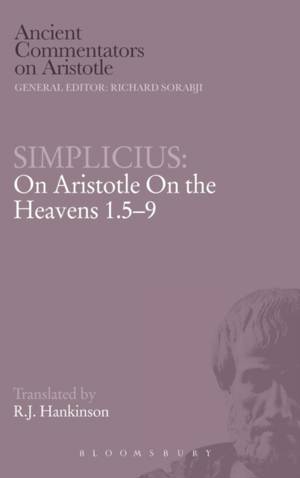
Aristotle argues in On the Heavens 1.5-7 that there can be no infinitely large body, and in 1.8-9 that there cannot be more than one physical world. As a corollary in 1.9, he infers that there is no place, vacuum or time beyond the outermost stars. As one argument in favour of a single world, he argues that his four elements: earth, air, fire and water, have only one natural destination apiece. Moreover they accelerate as they approach it and acceleration cannot be unlimited. However, the Neoplatonist Simplicius, who wrote the commentary in the sixth century AD (here translated into English), tells us that this whole world view was to be rejected by Strato, the third head of Aristotle's school. At the same time, he tells us the different theories of acceleration in Greek philosophy.
Specificaties
Betrokkenen
- Auteur(s):
- Vertaler(s):
- Uitgeverij:
Inhoud
- Aantal bladzijden:
- 192
- Taal:
- Engels
- Reeks:
Eigenschappen
- Productcode (EAN):
- 9780715632314
- Verschijningsdatum:
- 18/03/2004
- Uitvoering:
- Hardcover
- Formaat:
- Genaaid
- Afmetingen:
- 156 mm x 234 mm
- Gewicht:
- 449 g


Alleen bij Standaard Boekhandel
+ 279 punten op je klantenkaart van Standaard Boekhandel
SOLDEN


Beoordelingen
We publiceren alleen reviews die voldoen aan de voorwaarden voor reviews. Bekijk onze voorwaarden voor reviews.