


- Afhalen na 1 uur in een winkel met voorraad
- Gratis thuislevering in België vanaf € 30
- Ruim aanbod met 7 miljoen producten
- Afhalen na 1 uur in een winkel met voorraad
- Gratis thuislevering in België vanaf € 30
- Ruim aanbod met 7 miljoen producten





€ 83,45
+ 166 punten
Omschrijving
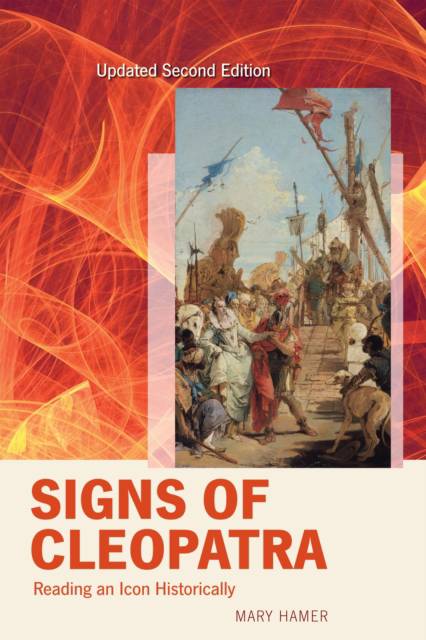
Cleopatra has been dead for twenty centuries, but her name still resonates in the west. Her story has the status of a foundation myth. As such, artists of all periods have drawn on it in order to raise questions concerned with the world in which they found themselves living.This study chooses a number of key occasions from European history on which writers and painters re-imagined Cleopatra. In doing so Mary Hamer takes the reader on a pleasurable intellectual treasure hunt through the ages. In addition, by restoring these works to their original context - political, philosophical and aesthetic - the author opens up unexpected new readings of images and texts which had previously appeared to be self-explanatory.The purpose of this book is to raise questions about how these images of a dead Egyptian queen were read. Through careful analysis Hamer traces attempts to manipulate attitudes to women and power, women and sexuality and to desire itself. In the case of Tiepolo's Cleopatra, for example, the Queen embodies the desire for knowledge; in post-Revolutionary France, she symbolises political freedom. In the new introductory essay we discover that Cleopatra's role as a focus for cultural debate continues, and that, as previously, much is at stake: it is now the question of her race that is highly contested.
Specificaties
Betrokkenen
- Auteur(s):
- Uitgeverij:
Inhoud
- Aantal bladzijden:
- 192
- Taal:
- Engels
Eigenschappen
- Productcode (EAN):
- 9780859898096
- Verschijningsdatum:
- 31/12/2009
- Uitvoering:
- Paperback
- Formaat:
- Trade paperback (VS)
- Afmetingen:
- 155 mm x 234 mm
- Gewicht:
- 362 g



Alleen bij Standaard Boekhandel
+ 166 punten op je klantenkaart van Standaard Boekhandel
Cadeau

AANGERADEN


Beoordelingen
We publiceren alleen reviews die voldoen aan de voorwaarden voor reviews. Bekijk onze voorwaarden voor reviews.