


- Afhalen na 1 uur in een winkel met voorraad
- Gratis thuislevering in België vanaf € 30
- Ruim aanbod met 7 miljoen producten
- Afhalen na 1 uur in een winkel met voorraad
- Gratis thuislevering in België vanaf € 30
- Ruim aanbod met 7 miljoen producten





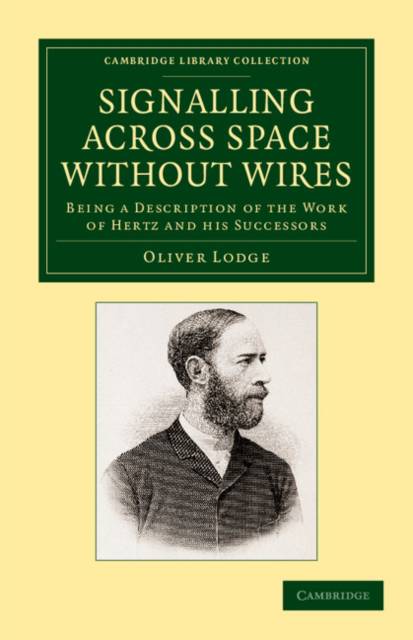
Signalling Across Space Without Wires
Being a Description of the Work of Hertz and His Successors
Oliver Lodge
€ 62,95
+ 125 punten
Omschrijving
The early 1890s saw the development of wireless telegraphy. Although the behaviour of radio waves had been predicted by James Clerk Maxwell, the production of a working coherer occupied some of the greatest practical physicists of the time. A giant in the field was Heinrich Hertz (1857-94), who was among the first to discover that radio waves could travel independently of wires. When Hertz died, his work was continued and soon led to the development of the first wireless radios. This book, published in 1900, is the third edition of Sir Oliver Lodge's popular explanation of Hertz's work. Including the Royal Institution lecture that Lodge (1851-1940) gave in 1894, along with detailed diagrams, it covers the basic principles of radio waves and some of the theory surrounding telegraphic technology. Also included in this reissue is Lodge's 1924 lecture on electrical precipitation, discussing the scintillating possibility of altering atmospheric conditions through the use of electrical charges.
Specificaties
Betrokkenen
- Auteur(s):
- Uitgeverij:
Inhoud
- Aantal bladzijden:
- 190
- Taal:
- Engels
- Reeks:
Eigenschappen
- Productcode (EAN):
- 9781108052122
- Verschijningsdatum:
- 28/03/2013
- Uitvoering:
- Paperback
- Formaat:
- Trade paperback (VS)
- Afmetingen:
- 140 mm x 216 mm
- Gewicht:
- 244 g


Alleen bij Standaard Boekhandel
+ 125 punten op je klantenkaart van Standaard Boekhandel
Cadeau

AANGERADEN


Beoordelingen
We publiceren alleen reviews die voldoen aan de voorwaarden voor reviews. Bekijk onze voorwaarden voor reviews.