


- Afhalen na 1 uur in een winkel met voorraad
- Gratis thuislevering in België vanaf € 30
- Ruim aanbod met 7 miljoen producten
- Afhalen na 1 uur in een winkel met voorraad
- Gratis thuislevering in België vanaf € 30
- Ruim aanbod met 7 miljoen producten





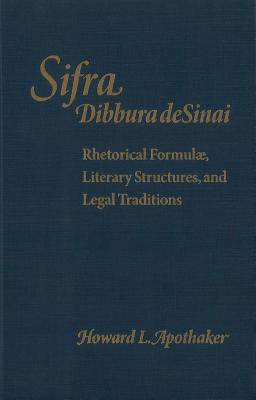
Sifra, Dibbura de Sinai
Rhetorical Formulae, Literary Structures, and Legal Traditions
Howard L Apothaker
€ 84,95
+ 169 punten
Omschrijving
Sifra is the earliest extant rabbinic commentary on the book of Leviticus. On a basic level, Sifra presents and validates rabbinic law, but this was done by creating a link between a proposition, halakhic or not, and a scriptural passage. Scholars in the last few decades-including Neusner and Stemberger-have debated Sifra's relationship to Mishnah-Tosefta. Howard Apothaker demonstrates that the set of rules in Dibbura deSinai on topics shared with Mishnah-Tosefta can be understood as an independent body of law. They share a common ancestor but represent different expressions of a similar worldview and with variant purposes. The framers of Sifra sought as their main objective to validate the essentiality, or non-superfluity, of every word of Scripture. Apothaker's analysis of the exegetical and rhetorical characteristics of Sifra in Sifra, Dibbura deSinai: Rhetorical Formulae, Literary Structures, and Legal Traditions builds on his translation of and commentary on the section of Dibbura deSinai which covers Leviticus 25-27. Analysis of Sifra's highly formalized rhetoric yields insight concerning the general purpose(s) for which the framers created the work.
Specificaties
Betrokkenen
- Auteur(s):
- Uitgeverij:
Inhoud
- Aantal bladzijden:
- 464
- Taal:
- Engels
- Reeks:
- Reeksnummer:
- nr. 28
Eigenschappen
- Productcode (EAN):
- 9780878204526
- Verschijningsdatum:
- 16/07/2003
- Uitvoering:
- Hardcover
- Formaat:
- Genaaid
- Afmetingen:
- 161 mm x 235 mm
- Gewicht:
- 816 g


Alleen bij Standaard Boekhandel
+ 169 punten op je klantenkaart van Standaard Boekhandel
AANGERADEN


Beoordelingen
We publiceren alleen reviews die voldoen aan de voorwaarden voor reviews. Bekijk onze voorwaarden voor reviews.