


- Afhalen na 1 uur in een winkel met voorraad
- Gratis thuislevering in België vanaf € 30
- Ruim aanbod met 7 miljoen producten
- Afhalen na 1 uur in een winkel met voorraad
- Gratis thuislevering in België vanaf € 30
- Ruim aanbod met 7 miljoen producten





€ 106,00
+ 212 punten
Omschrijving
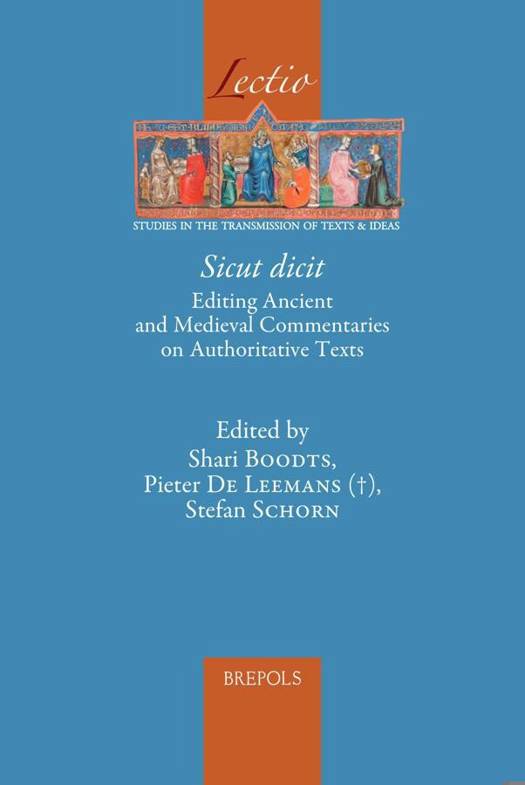
The manifold commentaries on the authoritative texts of Antiquity and the Middle Ages are increasingly being recognized as witnesses to a rich tradition of cultural reception and intellectual engagement. This renewed interest goes hand-in-hand with an increased demand for critical editions of the texts in question. However, the genre of the commentary presents a number of specific, sometimes unique challenges to the editor. An ancient or medieval text that comments on another one is inevitably shaped by it. The commentary can cite the commented work or copy its structure and regularly the two are presented together on the page, leading to complex relations between the texts and the manner of their presentation. Modern scholarship on the authoritative text that is commented on will often find it useful to consider the commentary. Vice versa, the editor of the commentary cannot turn a blind eye to the text commented on. Especially in the case of authoritative texts, both the commented text and the commentary usually have a complex transmission history. This volume explores the methodological challenges associated with the editing of commentaries on authoritative texts and shows their potential for the textual constitution of the latter ones. Bringing together twelve case studies spanning Antiquity to the Late Middle Ages, on texts written in Greek and Latin from a variety of fields, including literature, theology, philosophy, medicine, and law, the volume offers a broad, interdisciplinary perspective on commentaries on authoritative texts and the editors' work to accurately reconstruct and present them.
Specificaties
Betrokkenen
- Auteur(s):
- Uitgeverij:
Inhoud
- Aantal bladzijden:
- 300
- Taal:
- Engels
- Reeks:
- Reeksnummer:
- nr. 8
Eigenschappen
- Productcode (EAN):
- 9782503586496
- Verschijningsdatum:
- 31/01/2020
- Uitvoering:
- Hardcover
- Formaat:
- Genaaid
- Afmetingen:
- 157 mm x 239 mm
- Gewicht:
- 771 g


Alleen bij Standaard Boekhandel
+ 212 punten op je klantenkaart van Standaard Boekhandel
Cadeau

AANGERADEN


Beoordelingen
We publiceren alleen reviews die voldoen aan de voorwaarden voor reviews. Bekijk onze voorwaarden voor reviews.