


- Afhalen na 1 uur in een winkel met voorraad
- Gratis thuislevering in België vanaf € 30
- Ruim aanbod met 7 miljoen producten
- Afhalen na 1 uur in een winkel met voorraad
- Gratis thuislevering in België vanaf € 30
- Ruim aanbod met 7 miljoen producten





€ 90,10
+ 180 punten
Omschrijving
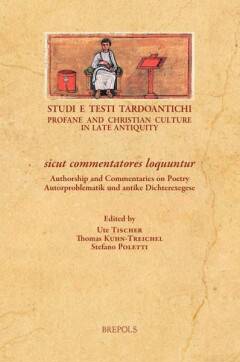
Ancient commentaries on poetry - due to their heteronomous nature, their miscellaneous character, and the fact that most of them are transmitted in abridged and anonymous form - are usually not considered 'authorial' texts in the same way as poems or literary prose are. On the other hand, as didactic texts, they rely on authority to convey their interpretation, and they also often seem to have been perceived as products of authorial activity, as paratexts, references and pseudepigraphic attributions demonstrate. The aim of this volume is to explore this tension and to examine commentaries and scholia on poetry in terms of authorship and 'authoriality'. The contributions use several Latin and Greek corpora as case studies to shed light on how these texts were read, how they display authorial activity themselves, and how they fulfil their function as didactic works. They provide reflections on the relationship of author, authorship, and authority in 'authorless' traditions, explore how authorial figures and authorial viewpoints emerge in an implicit manner in spite of the stratified nature of commentaries, investigate the authorial roles adopted by commentators, compilers and scribes, and elucidate how commentators came to be perceived as authors in other exegetic traditions.
Specificaties
Betrokkenen
- Auteur(s):
- Uitgeverij:
Inhoud
- Aantal bladzijden:
- 480
- Taal:
- Frans
- Reeks:
- Reeksnummer:
- nr. 21
Eigenschappen
- Productcode (EAN):
- 9782503605340
- Verschijningsdatum:
- 10/07/2023
- Uitvoering:
- Paperback
- Formaat:
- Trade paperback (VS)
- Gewicht:
- 797 g


Alleen bij Standaard Boekhandel
+ 180 punten op je klantenkaart van Standaard Boekhandel
CADEAU

AANGERADEN


Beoordelingen
We publiceren alleen reviews die voldoen aan de voorwaarden voor reviews. Bekijk onze voorwaarden voor reviews.