


- Afhalen na 1 uur in een winkel met voorraad
- Gratis thuislevering in België vanaf € 30
- Ruim aanbod met 7 miljoen producten
- Afhalen na 1 uur in een winkel met voorraad
- Gratis thuislevering in België vanaf € 30
- Ruim aanbod met 7 miljoen producten





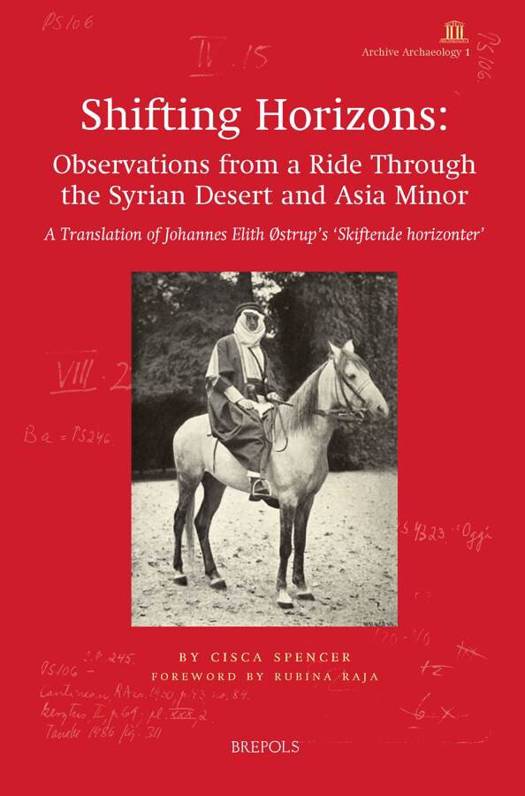
Shifting Horizons
Observations from a Ride Through the Syrian Desert and Asia Minor: A Translation of Johannes Elith Ostrup's 'Skiftende Horizonter'
Cisca Spencer
€ 95,40
+ 190 punten
Omschrijving
Johannes Elith Ostrup (1867-1938), son of a Danish farmer, philologist of Turkish and Semitic languages, and later Vice Chancellor of Copenhagen University, spent 1891-1893 travelling by horse around Syria, Lebanon, and Anatolia. Unlike most European travellers, his language skills allowed him to chat with locals in cafes, stay in people's homes, and travel with the Bedouin. A curious young man, Ostrup travelled with eyes, ears, and mind open to the unknown, and recorded his journey in this lively travelogue, Skiftende horizonter (1894). His writing offers a vivid account of his time in the region, and dwells with equal interest on both the region's broader political, ethnic, and religious struggles, and the day-to-day concerns of those who lived there. Now, for the first time, this text is available to English-speaking readers thanks to this translation by Cisca Spencer, Ostrup's great granddaughter and a former Australian diplomat. With a foreword by Rubina Raja, Professor of Classical Archaeology at Aarhus University, together with Ostrup's own photographs and new maps, this volume captures all the charm and enthusiasm of the original in bringing this nineteenth-century travelogue to a modern readership.
Specificaties
Betrokkenen
- Auteur(s):
- Uitgeverij:
Inhoud
- Aantal bladzijden:
- 179
- Taal:
- Engels
- Reeks:
- Reeksnummer:
- nr. 1
Eigenschappen
- Productcode (EAN):
- 9782503596822
- Verschijningsdatum:
- 30/06/2022
- Uitvoering:
- Paperback
- Formaat:
- Trade paperback (VS)
- Gewicht:
- 7978 g



Alleen bij Standaard Boekhandel
+ 190 punten op je klantenkaart van Standaard Boekhandel
Cadeau

AANGERADEN


Beoordelingen
We publiceren alleen reviews die voldoen aan de voorwaarden voor reviews. Bekijk onze voorwaarden voor reviews.