


- Afhalen na 1 uur in een winkel met voorraad
- Gratis thuislevering in België vanaf € 30
- Ruim aanbod met 7 miljoen producten
- Afhalen na 1 uur in een winkel met voorraad
- Gratis thuislevering in België vanaf € 30
- Ruim aanbod met 7 miljoen producten





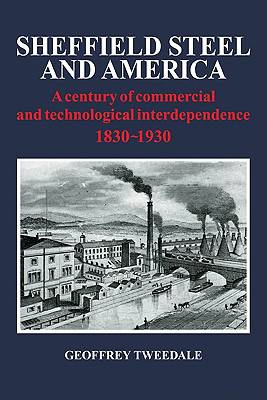
Sheffield Steel and America
A Century of Commercial and Technological Interdependence 1830-1930
Geoffrey Tweedale
Paperback | Engels
€ 86,45
+ 172 punten
Uitvoering
Omschrijving
The book provides an important contribution to the technological and commercial history of crucible and electric steelmaking by thoroughly examining its development in Sheffield and American centres such as Pittsburgh. It also discusses cutlery, saw and file manufacturing, where the Americans quickly shed Sheffield's traditional technologies and, with the help of superior marketing, established a word lead by 1900. It is also shown, however, that this did not free the US from its dependence on Sheffield steel. Sheffield's innovation in special steelmaking, which began with the Hunstman crucible process in 1742, continued with a series of brilliant 'firsts', which gave the world tool, manganese, silicon, vanadium and stainless steel alloys. Thus the US continued to draw from Sheffield know-how, even in the twentieth century - a transfer of technology that was facilitated by the foundation of Sheffield's own subsidiary firms in America, the history of which is recounted here.
Specificaties
Betrokkenen
- Auteur(s):
- Uitgeverij:
Inhoud
- Aantal bladzijden:
- 316
- Taal:
- Engels
Eigenschappen
- Productcode (EAN):
- 9780521109758
- Verschijningsdatum:
- 30/04/2009
- Uitvoering:
- Paperback
- Formaat:
- Trade paperback (VS)
- Afmetingen:
- 152 mm x 229 mm
- Gewicht:
- 462 g


Alleen bij Standaard Boekhandel
+ 172 punten op je klantenkaart van Standaard Boekhandel
Cadeau

AANGERADEN


Beoordelingen
We publiceren alleen reviews die voldoen aan de voorwaarden voor reviews. Bekijk onze voorwaarden voor reviews.