


- Afhalen na 1 uur in een winkel met voorraad
- Gratis thuislevering in België vanaf € 30
- Ruim aanbod met 7 miljoen producten
- Afhalen na 1 uur in een winkel met voorraad
- Gratis thuislevering in België vanaf € 30
- Ruim aanbod met 7 miljoen producten





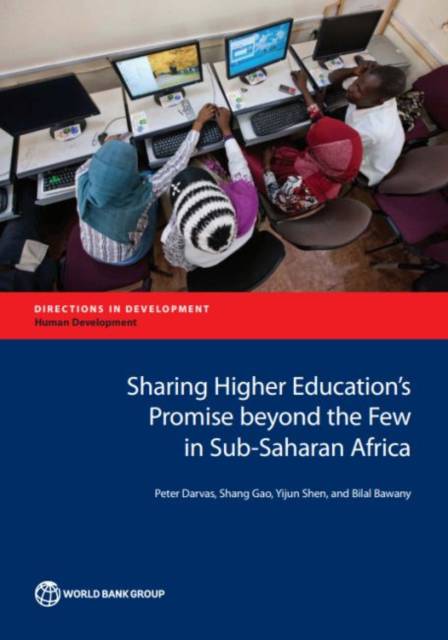
Sharing Higher Education's Promise Beyond the Few in Sub-Saharan Africa
Peter Darvas, Shang Gao, Yijun Shen, Bilal Bawany
€ 56,45
+ 112 punten
Eenvoudig bestellen
Veilig betalen


Gratis thuislevering vanaf € 30 (via bpost)
Gratis levering in je Standaard Boekhandel
Omschrijving
Despite a spectacular expansion of the higher education sector in Sub-Saharan Africa, the supply of tertiary education has generally failed to keep pace with demand, and the region continues to lag behind all other regions in terms of access to tertiary education. This is in part a consequence of deeply entrenched patterns of inequitable access to higher education, and the perpetuation of what researchers refer to as "elite systems." To date, access to tertiary education in Sub-Saharan Africa has unduly benefited students drawn from the region's wealthiest households, and overall enrollment remains disproportionately male and metropolitan. These factors stifle the catalytic potential of higher education, corroding its potential for driving economic growth and sustaining poverty reduction. Instead, patterns of access to tertiary education have generally reinforced and reproduced social inequality, instead of eroding its pernicious social and economic effects. Sharing Higher Education's Promise beyond the Few in Sub-Saharan Africa aims to inform an improved understanding of equity in tertiary enrollment in Sub-Saharan African countries and to examine the extent to which inequity functions as a bottleneck, inhibiting the ability of African universities to effectively drive improvements in overall quality of life and economic competitiveness. In our survey of the evidence, we also aim to identify which policies most effectively address the challenge of promoting equity of access in Sub-Saharan African tertiary education systems. To achieve these objectives, the book collects, generates, and analyzes empirical evidence on patterns of equity; examines the underlying causes of inequity; and evaluates government policies for addressing inequity.
Specificaties
Betrokkenen
- Auteur(s):
- Uitgeverij:
Inhoud
- Aantal bladzijden:
- 118
- Taal:
- Engels
- Reeks:
Eigenschappen
- Productcode (EAN):
- 9781464810503
- Verschijningsdatum:
- 15/11/2017
- Uitvoering:
- Paperback
- Formaat:
- Trade paperback (VS)
- Afmetingen:
- 178 mm x 254 mm
- Gewicht:
- 222 g


Alleen bij Standaard Boekhandel
+ 112 punten op je klantenkaart van Standaard Boekhandel
CADEAU

AANGERADEN


Beoordelingen
We publiceren alleen reviews die voldoen aan de voorwaarden voor reviews. Bekijk onze voorwaarden voor reviews.