


- Afhalen na 1 uur in een winkel met voorraad
- Gratis thuislevering in België vanaf € 30
- Ruim aanbod met 7 miljoen producten
- Afhalen na 1 uur in een winkel met voorraad
- Gratis thuislevering in België vanaf € 30
- Ruim aanbod met 7 miljoen producten





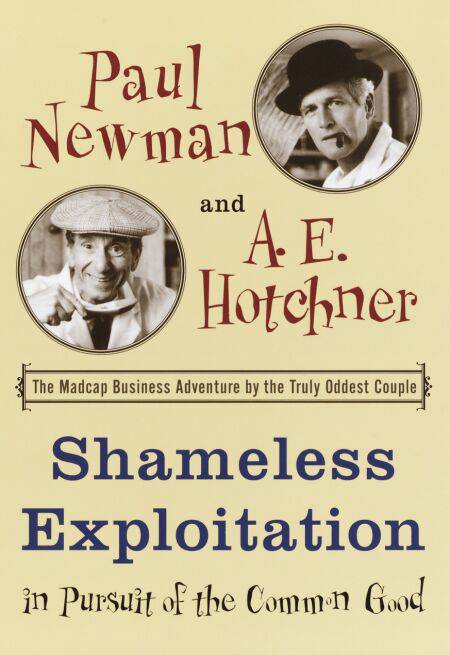
Shameless Exploitation in Pursuit of the Common Good E-BOOK
The Madcap Business Adventure by the Truly Oddest Couple
Paul Newman, A.E. Hotchner
E-book | Engels
€ 6,93
+ 6 punten
Omschrijving
“There are three rules for running a business; fortunately, we don’t know any of them.”
In 1978, Paul Newman and A. E. Hotchner decided that rather than just distribute Paul’s own salad dressing at Christmas to neighbors, they would offer it to a few local stores. Freewheeling, irreverent entrepreneurs, they conceived of their venture as a great way to poke fun at the mundane method of traditional marketing. Much to their surprise, the dressing was enthusiastically received. What had started as a lark quickly escalated into a full-fledged business, the first company to place all-natural foods in supermarkets. From salad dressing to spaghetti sauce, to popcorn and lemonade, Newman’s Own became a major player in the food business. The company’s profits were originally donated to medical research, education, and the environment, and eventually went to the creation of the eight Hole in the Wall Gang camps for children with serious illnesses. In these pages Newman and Hotchner recount the picaresque saga of their own nonmanagement adventure. In alternating voices, playing off one another in classic “Odd Couple” style, they describe how they systematically disregarded the advice of experts and relied instead on instinct, imagination, and mostly luck. They write about how they hurdled obstacle after obstacle, share their hilarious misadventures, and reveal their offbeat solutions to conventional problems. Even their approach to charity is decidedly different: every year they give away all the company’s profits, empty the coffers, and start over again. The results of this amazing generosity are brought to life in heartwarming stories about the children at their camps. With rare glimpses into their zany style and their compassion for those less fortunate, Newman and Hotchner have written the perfect nonmanagement book, at once playful, informative, and inspirational.
In 1978, Paul Newman and A. E. Hotchner decided that rather than just distribute Paul’s own salad dressing at Christmas to neighbors, they would offer it to a few local stores. Freewheeling, irreverent entrepreneurs, they conceived of their venture as a great way to poke fun at the mundane method of traditional marketing. Much to their surprise, the dressing was enthusiastically received. What had started as a lark quickly escalated into a full-fledged business, the first company to place all-natural foods in supermarkets. From salad dressing to spaghetti sauce, to popcorn and lemonade, Newman’s Own became a major player in the food business. The company’s profits were originally donated to medical research, education, and the environment, and eventually went to the creation of the eight Hole in the Wall Gang camps for children with serious illnesses. In these pages Newman and Hotchner recount the picaresque saga of their own nonmanagement adventure. In alternating voices, playing off one another in classic “Odd Couple” style, they describe how they systematically disregarded the advice of experts and relied instead on instinct, imagination, and mostly luck. They write about how they hurdled obstacle after obstacle, share their hilarious misadventures, and reveal their offbeat solutions to conventional problems. Even their approach to charity is decidedly different: every year they give away all the company’s profits, empty the coffers, and start over again. The results of this amazing generosity are brought to life in heartwarming stories about the children at their camps. With rare glimpses into their zany style and their compassion for those less fortunate, Newman and Hotchner have written the perfect nonmanagement book, at once playful, informative, and inspirational.
Specificaties
Betrokkenen
- Auteur(s):
- Uitgeverij:
Inhoud
- Aantal bladzijden:
- 272
- Taal:
- Engels
Eigenschappen
- Productcode (EAN):
- 9780385511599
- Verschijningsdatum:
- 3/11/2003
- Uitvoering:
- E-book
- Beveiligd met:
- Adobe DRM
- Formaat:
- ePub


Alleen bij Standaard Boekhandel
+ 6 punten op je klantenkaart van Standaard Boekhandel
Cadeau

AANGERADEN


Beoordelingen
We publiceren alleen reviews die voldoen aan de voorwaarden voor reviews. Bekijk onze voorwaarden voor reviews.