


- Afhalen na 1 uur in een winkel met voorraad
- Gratis thuislevering in België vanaf € 30
- Ruim aanbod met 7 miljoen producten
- Afhalen na 1 uur in een winkel met voorraad
- Gratis thuislevering in België vanaf € 30
- Ruim aanbod met 7 miljoen producten





€ 74,45
+ 148 punten
Omschrijving
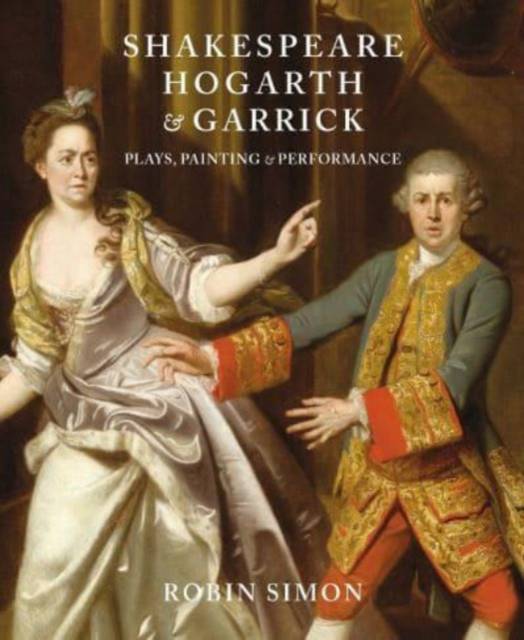
In London in 1770 Georg Christoph Lichtenberg (1742–1799) remarked, 'What a work could be written on Shakespeare, Hogarth and Garrick! There is something similar in the genius of all three.' Two-and-a-half centuries on, Robin Simon's highly original and illuminating book takes up the challenge.
William Hogarth (1697–1764) and David Garrick (1717–1779) closely associated themselves with Shakespeare, embodying a relationship between plays, painting and performance that had been understood since Antiquity and which shaped the rules for history painting drawn up by the Académie royale in Paris in the seventeenth century.
History painting was considered the highest form of art: a picture illustrating
a moment drawn from just a few lines in a revered text. Hogarth’s David Garrick
as Richard III (1745) transformed those ideas because, although it looked like a
history painting, it was also a portrait of an actor in performance. With it, Hogarth established the genre of theatrical portraiture, a new and distinctively British kind of history painting.
This book offers a fresh examination of theatrical portraits through close analysis of the pictures and of the texts used in performance. It also examines the central role of the theatre in British culture, while highlighting the significance of Shakespeare, Hogarth and Garrick in the European Enlightenment and the rise of Romanticism. In this context another trio of genius features prominently: Lichtenberg, Gotthold Ephraim Lessing and Denis Diderot.
Familiar paintings and performances are seen in an entirely new light, while
unfamiliar pictures are also introduced, including major paintings and drawings that have never been published.
The final chapter shows that the inter-relationship between plays, painting and
performance survived into the age of cinema, revealing the pictorial sources of Laurence Olivier’s legendary film Richard III.
William Hogarth (1697–1764) and David Garrick (1717–1779) closely associated themselves with Shakespeare, embodying a relationship between plays, painting and performance that had been understood since Antiquity and which shaped the rules for history painting drawn up by the Académie royale in Paris in the seventeenth century.
History painting was considered the highest form of art: a picture illustrating
a moment drawn from just a few lines in a revered text. Hogarth’s David Garrick
as Richard III (1745) transformed those ideas because, although it looked like a
history painting, it was also a portrait of an actor in performance. With it, Hogarth established the genre of theatrical portraiture, a new and distinctively British kind of history painting.
This book offers a fresh examination of theatrical portraits through close analysis of the pictures and of the texts used in performance. It also examines the central role of the theatre in British culture, while highlighting the significance of Shakespeare, Hogarth and Garrick in the European Enlightenment and the rise of Romanticism. In this context another trio of genius features prominently: Lichtenberg, Gotthold Ephraim Lessing and Denis Diderot.
Familiar paintings and performances are seen in an entirely new light, while
unfamiliar pictures are also introduced, including major paintings and drawings that have never been published.
The final chapter shows that the inter-relationship between plays, painting and
performance survived into the age of cinema, revealing the pictorial sources of Laurence Olivier’s legendary film Richard III.
Specificaties
Betrokkenen
- Auteur(s):
- Uitgeverij:
Inhoud
- Aantal bladzijden:
- 256
- Taal:
- Engels
Eigenschappen
- Productcode (EAN):
- 9781913645441
- Verschijningsdatum:
- 15/04/2023
- Uitvoering:
- Hardcover
- Afmetingen:
- 254 mm x 297 mm
- Gewicht:
- 1736 g


Alleen bij Standaard Boekhandel
+ 148 punten op je klantenkaart van Standaard Boekhandel
Cadeau

AANGERADEN


Beoordelingen
We publiceren alleen reviews die voldoen aan de voorwaarden voor reviews. Bekijk onze voorwaarden voor reviews.