


- Afhalen na 1 uur in een winkel met voorraad
- Gratis thuislevering in België vanaf € 30
- Ruim aanbod met 7 miljoen producten
- Afhalen na 1 uur in een winkel met voorraad
- Gratis thuislevering in België vanaf € 30
- Ruim aanbod met 7 miljoen producten





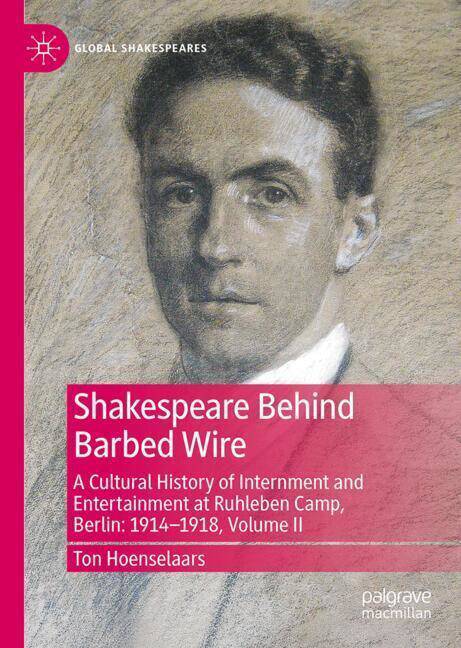
Shakespeare Behind Barbed Wire
A Cultural History of Internment and Entertainment at Ruhleben Camp, Berlin: 1914-1918, Volume II
Ton Hoenselaars
€ 140,95
+ 281 punten
Uitvoering
Omschrijving
Shakespeare was vital to the survival of the 4,500 British internees at the Ruhleben Camp (near Berlin), for the duration of World War I. Shakespeare Behind Barbed Wire, Volume II, studies the activity at Ruhleben following the Tercentenary of Shakespeare s death in 1916. Its focus remains on group behaviour, but it also devotes ample attention to personal engagement and a number of notable individual achievements involving Shakespeare and early modern drama. In 1916, Michael Pease directed Francis Beaumont s Knight of the Burning Pestle. Cecil Duncan Jones experimented with scenes from Shakespeare in modern dress, but also staged Everyman. In 1917, Archibald Welland mounted The Merry Wives of Windsor, which offers us new insights into four years of drag performances at Ruhleben. This second volume also takes a detailed look at the prominent Shakespearean Alois Brandl, whose unflattering relations with Ruhleben his treatment of British staff at Berlin s Humboldt University, and his linguistic research on the camp s internees have been ignored. For the first time it also studies the internees transfer from Ruhleben to The Hague in 1918, where they founded a British Theatre for Shakespeare and other canonical drama. The men s intense engagement with Shakespeare, which formed part of their imagined community spirit at Ruhleben, generally declined on their return to Britain. Exhaustively drawing on camp archives, the internees diaries, their letters and creative writing, as well as the Ruhleben story as it was fashioned in its numerous magazines and in the press worldwide, Shakespeare Behind Barbed Wire reconstructs the profoundly individual side to Ruhleben s rich Shakespearean life. In both its local and global contexts, this work grants the internees a unique voice that had remained silent for over a century.
Specificaties
Betrokkenen
- Auteur(s):
- Uitgeverij:
Inhoud
- Taal:
- Engels
- Reeks:
Eigenschappen
- Productcode (EAN):
- 9783032320186
- Verschijningsdatum:
- 11/12/2026
- Uitvoering:
- Hardcover
- Afmetingen:
- 148 mm x 210 mm



Alleen bij Standaard Boekhandel
+ 281 punten op je klantenkaart van Standaard Boekhandel
CADEAU

AANGERADEN


Beoordelingen
We publiceren alleen reviews die voldoen aan de voorwaarden voor reviews. Bekijk onze voorwaarden voor reviews.